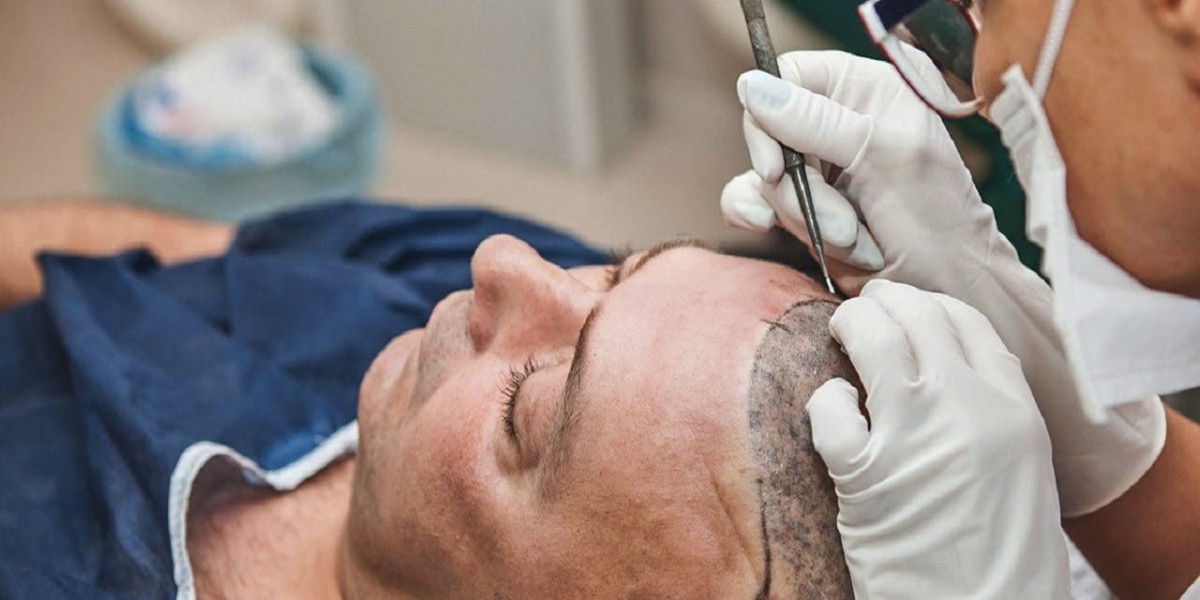

Hair restoration has evolved tremendously over the years, offering patients advanced, minimally invasive options to combat hair loss. Two of the most popular and effective techniques today are Direct Hair Implantation (DHI) and Follicular Unit Extraction (FUE). Both deliver natural-looking, long-lasting results—but they differ in technique, tools, and recovery.
If you are considering a Hair Transplant in Islamabad, understanding the difference between DHI and FUE can help you make an informed decision. Islamabad is home to several clinics offering modern hair restoration methods, where experienced surgeons customize treatment plans based on the patient’s hair type, scalp condition, and desired outcome. Let’s explore how DHI and FUE compare in terms of process, advantages, results, and suitability.
Understanding the Basics of Hair Transplant Techniques
Before we compare the two methods, let’s look at what both procedures aim to achieve.
A hair transplant involves transferring hair follicles from the donor area (usually the back or sides of the scalp) to areas experiencing thinning or baldness. Both DHI and FUE follow this basic principle, but they differ in how the extracted grafts are implanted into the recipient area.
What Is Traditional FUE?
Follicular Unit Extraction (FUE) is one of the most widely performed hair transplant techniques worldwide. It involves individually extracting follicular units using a micro-punch tool and then implanting them into tiny incisions made in the bald area.
Step-by-Step FUE Process:
Donor Area Preparation: The back of the scalp is trimmed, and local anesthesia is applied.
Extraction: Individual hair follicles are extracted using a micro-punch device (0.8–1.0 mm in diameter).
Graft Storage: Extracted follicles are stored in a nutrient-rich solution to preserve viability.
Incision Creation: Tiny incisions are made in the recipient area according to the desired density and angle.
Implantation: The grafts are manually inserted into the incisions using forceps or implanter pens.
Advantages of FUE:
Minimally invasive with no linear scarring.
Shorter recovery compared to traditional FUT (strip method).
Natural-looking results with high graft survival rates.
Suitable for various levels of baldness.
However, the FUE method involves two distinct steps—extraction and implantation—which require time and precision. The gap between extraction and implantation can sometimes affect graft survival if not managed properly.
What Is Direct Hair Implantation (DHI)?
Direct Hair Implantation (DHI) is a newer and more advanced version of the FUE technique. The key difference lies in the implantation process. Instead of creating incisions and then manually placing grafts, DHI uses a specialized Choi Implanter Pen that allows for extraction and implantation to happen almost simultaneously.
Step-by-Step DHI Process:
Donor Hair Extraction: Similar to FUE, follicles are extracted one by one from the donor area using a fine punch tool.
Implantation with Choi Pen: Each follicle is loaded into a Choi Implanter Pen and implanted directly into the scalp. The pen creates the channel and implants the graft in a single motion.
Precise Placement: The surgeon controls the depth, angle, and direction of each implant, allowing for a highly natural hairline and density.
Advantages of DHI:
No Pre-Made Incisions: Reduces scalp trauma and bleeding.
Faster Graft Implantation: Shorter time between extraction and placement increases graft survival.
Higher Precision: Perfect control over angle and depth for a natural result.
Faster Recovery: Minimal scarring and less post-operative discomfort.
No Shaving Required: In many cases, patients can undergo DHI without shaving the entire head.
DHI vs. FUE: A Detailed Comparison
| Feature | Traditional FUE | Direct Hair Implantation (DHI) |
|---|---|---|
| Incisions | Small incisions made before implantation | No pre-made incisions required |
| Implantation Tool | Forceps or manual implanter | Choi Implanter Pen |
| Procedure Time | Longer (due to separate incision and implantation steps) | Faster (implantation and incision in one step) |
| Graft Survival Rate | 85–90% | 90–95% |
| Anesthesia | Local | Local |
| Recovery Time | 7–10 days | 5–7 days |
| Scarring | Minimal dot scars | Virtually no visible scars |
| Hair Density | Moderate | Higher density achievable |
| Cost | Relatively lower | Slightly higher due to advanced technology |
Which Method Offers More Natural Results?
While both FUE and DHI produce natural results, DHI tends to provide slightly more precise and denser outcomes because of the Choi Implanter Pen’s control.
The surgeon can replicate the natural growth pattern by adjusting the implantation angle and depth for each follicle. This makes DHI ideal for patients focusing on hairline restoration and areas that require detailed work.
However, the success of either method largely depends on the surgeon’s expertise. Even the best tools can’t deliver natural results without proper artistry and experience.
Who Is the Right Candidate for Each Procedure?
FUE Hair Transplant Is Ideal For:
Patients with moderate to advanced baldness.
Those seeking full scalp coverage.
Individuals who want a cost-effective and proven method.
DHI Hair Transplant Is Ideal For:
Patients with early-stage hair loss or specific bald patches.
Those who prefer minimal downtime and faster recovery.
Individuals seeking hairline refinement or high-density restoration.
Patients who want to avoid shaving their head.
Recovery and Aftercare: DHI vs. FUE
Both DHI and FUE involve similar recovery phases, though DHI tends to be slightly faster due to less trauma.
Here’s what to expect post-procedure:
Swelling and Redness: Usually subside within a few days.
Scab Formation: Occurs around implanted grafts and falls off within 10 days.
Hair Shedding Phase: Transplanted hair sheds within 3–4 weeks—this is normal.
Regrowth Phase: New hair begins to appear after 3–4 months, with full results visible at around 9–12 months.
Post-transplant care, including gentle washing, avoiding direct sunlight, and following your doctor’s instructions, ensures optimal graft survival and natural outcomes.
Cost Comparison: DHI vs. FUE in Islamabad
The cost of both procedures in Islamabad depends on several factors, including the number of grafts, surgeon’s experience, and clinic reputation.
FUE Hair Transplant: Typically ranges between PKR 80,000 to 200,000.
DHI Hair Transplant: Usually costs 20–30% more due to the specialized technique and tools used.
Though DHI is more expensive, many patients find the investment worthwhile because of its precision, minimal invasiveness, and high graft survival rate.
Choosing the Right Technique
Your choice between DHI and FUE should be based on your hair loss stage, density goals, and lifestyle preferences. A professional consultation will help determine which method suits your needs best.
In some cases, a combination approach may be recommended—for example, using DHI for the hairline and FUE for broader areas—to achieve optimal results.
Conclusion
Both DHI and FUE are highly effective hair restoration methods that can transform your appearance and confidence. While FUE remains a reliable and widely used technique, DHI represents the next level of innovation—offering greater precision, higher density, and faster recovery.
If you’re considering a Hair Transplant in Islamabad, consult the experts at the Dynamic Aesthetic Clinic. Their experienced surgeons specialize in both DHI and FUE techniques, using state-of-the-art technology to ensure natural, long-lasting results. Whether you’re looking to refine your hairline or achieve full scalp coverage, Dynamic Aesthetic Clinic provides personalized solutions designed for your unique goals and hair type.