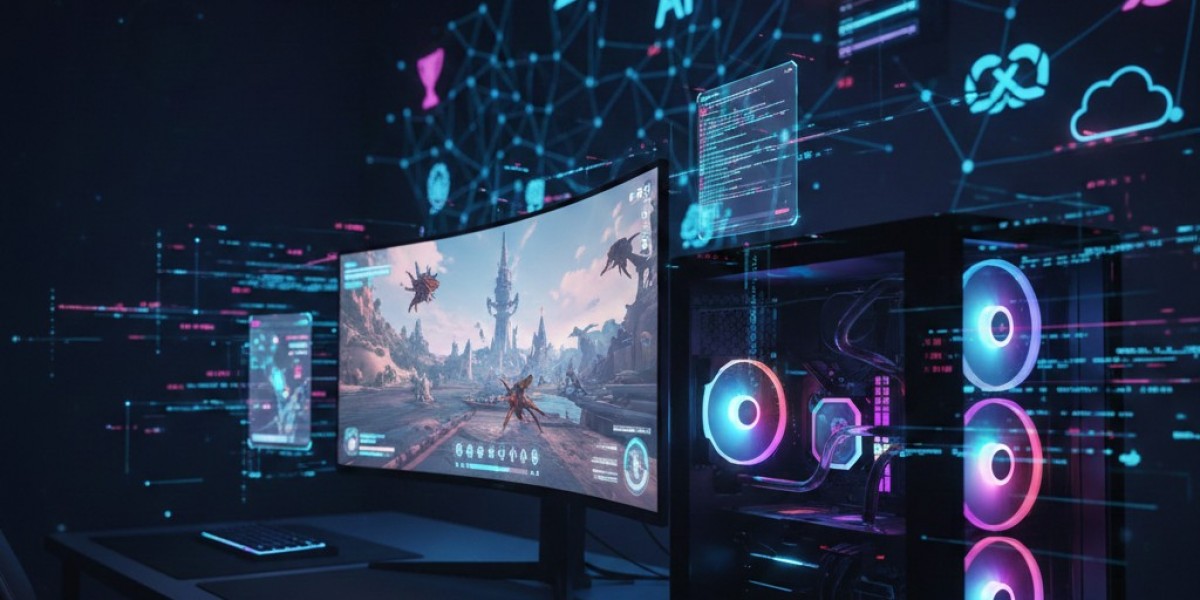

How Modern Gaming Technology Is Shaping the Future of Digital Entertainment
Introduction
Gaming is no longer a side branch of technology—it is one of its strongest driving forces. From high-performance graphics cards to artificial intelligence, cloud computing, and real-time networking, the gaming industry consistently pushes hardware and software beyond conventional limits. What makes gaming unique is its requirement for instant responsiveness, realism, and scalability, all at the same time.
Today’s gaming ecosystem influences everything from consumer electronics to enterprise software development. This article explores how modern gaming technology works, why it matters, and how it is shaping the future of digital entertainment and computing itself.
The Technological Evolution of Video Games
From Arcade Machines to Photorealistic Worlds
Early video games were limited by strict hardware constraints. Developers worked with minimal memory, slow processors, and extremely basic graphics. Despite this, foundational programming principles such as game loops, sprite rendering, and input handling were created during this era.
Modern games, by contrast, are built using advanced engines capable of:
Real-time 3D rendering
Complex physics simulations
Dynamic lighting and shadows
High-resolution textures and animations
Game development today closely resembles large-scale software engineering, often requiring years of development and hundreds of specialized professionals.
Gaming Hardware: The Backbone of Performance
Graphics Cards and Real-Time Rendering
Gaming is the primary reason graphics processing units became as powerful as they are today. Real-time rendering demands parallel processing on a massive scale. Technologies such as real-time ray tracing, shader pipelines, and frame generation were originally developed for games before being adopted in other industries.
Gaming GPUs now play a critical role in:
Artificial intelligence training
Video production and rendering
Scientific modeling
Virtual simulations
CPUs, Memory, and Storage in Gaming
Modern games rely heavily on multi-core CPUs to handle:
Game logic
Physics calculations
AI decision systems
High-speed RAM ensures smooth performance, while SSD and NVMe storage allow developers to create large open worlds without long loading screens. Gaming has directly influenced the shift away from mechanical hard drives in consumer systems.
Game Engines as Advanced Development Platforms
Game engines have evolved into full development ecosystems. They provide tools for:
Rendering
Animation
Audio processing
Physics
Cross-platform deployment
Engines like Unreal-style and Unity-style platforms are now used beyond gaming, including architecture visualization, film production, medical training, and virtual simulations. This crossover demonstrates how gaming tools often become industry standards.
Artificial Intelligence in Modern Games
Smarter Enemies and Realistic NPCs
Artificial intelligence in gaming has moved far beyond scripted behavior. Modern AI systems allow non-player characters to:
React dynamically to player actions
Adapt strategies during gameplay
Simulate emotional and social behavior
Create emergent, unpredictable experiences
These techniques help developers test and refine AI models that later influence robotics, automation, and decision-making software.
Data-Driven Game Design
Games generate massive amounts of player data. Developers analyze this data to:
Balance gameplay mechanics
Improve player retention
Detect cheating or abuse
Personalize in-game experiences
This approach mirrors how modern tech companies use analytics and machine learning to optimize user engagement.
Online Gaming, Multiplayer Systems, and Cloud Infrastructure
Networking and Low-Latency Design
Online multiplayer gaming requires extremely fast and reliable communication. This demand has accelerated innovation in:
Server optimization
Distributed networking
Latency reduction techniques
Real-time synchronization
Many of the technologies used in video calls, live collaboration tools, and streaming services were refined through online gaming infrastructure.
Cloud Gaming and Streaming
Cloud gaming allows users to play high-end games without powerful local hardware. All processing happens on remote servers, with gameplay streamed to the user’s device. While this model introduces challenges such as latency and bandwidth dependency, it represents a significant shift in how games are distributed and accessed.
Competitive Gaming and the Rise of Esports
Technology Behind Esports
Esports depends on precision hardware and software:
High refresh rate monitors
Low-latency input devices
Advanced streaming and broadcasting tools
Real-time performance analytics
Large esports events operate with infrastructure similar to professional sports broadcasts, blending gaming with advanced media technology.
Content Creation and Game Streaming
Gaming has created an entire creator economy. Streamers and video creators rely on:
Real-time encoding software
Compression algorithms
Interactive chat systems
Monetization platforms
This ecosystem has redefined how digital entertainment content is produced and consumed.
Security, Anti-Cheat Systems, and Fair Play
As games become more competitive and financially valuable, security becomes critical. Developers implement:
Kernel-level anti-cheat systems
Encrypted network communication
Behavioral analysis algorithms
These systems are similar to those used in cybersecurity and enterprise fraud detection, proving again how gaming pushes technological boundaries.
Virtual Reality, Augmented Reality, and Immersion
Gaming is one of the most demanding applications for VR and AR technologies. These systems require:
Extremely low latency
Precise motion tracking
High frame rates
Natural interaction models
Research done for immersive gaming is now used in training simulations, education, healthcare, and remote collaboration.
The Economic and Technological Impact of Gaming
Gaming is a global industry worth hundreds of billions of dollars. It drives:
Job creation across tech disciplines
Growth of digital marketplaces
Innovation in online payments and virtual economies
In-game economies often resemble real financial systems, with supply, demand, inflation, and digital ownership playing major roles.
The Future of Gaming Technology
Key trends shaping the future include:
AI-generated game worlds and assets
Deeper cloud integration
Cross-platform gaming ecosystems
Greater focus on accessibility
Blending of social platforms and games
Gaming will continue to act as a proving ground for next-generation technology.
Conclusion
Gaming is not just influenced by technology—it actively shapes it. From GPUs and AI to networking and immersive systems, gaming remains one of the most demanding and innovative areas of digital development. As technology advances, gaming will continue to define what is possible in real-time computing and interactive entertainment.