
Lethal Company: Why This Indie Horror Game Became a Massive Co-Op Phenomenon
Introduction
Lethal Company is one of the most surprising breakout games in recent years. Developed by indie creator Zeekerss, the game combines cooperative survival horror with physics-driven gameplay and unpredictable encounters. Despite its simple graphics and minimalist design, Lethal Company quickly gained massive popularity due to its tense atmosphere, emergent gameplay, and highly entertaining multiplayer moments.
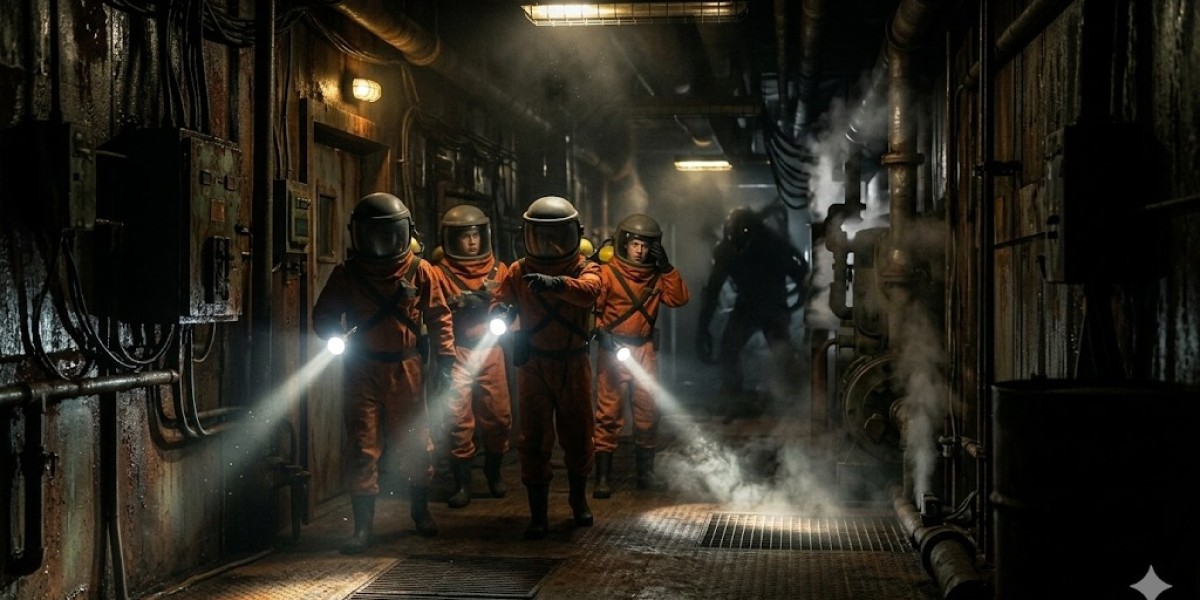
Unlike traditional horror games that rely heavily on scripted scares, Lethal Company creates fear through unpredictability. Players are dropped into abandoned facilities on distant moons and must gather scrap while avoiding deadly creatures. Every mission becomes a chaotic mix of teamwork, panic, and improvisation.
The Core Concept: Work for the Company or Face the Consequences
The central objective in Lethal Company is straightforward: players are employees working for a mysterious corporation known only as “The Company.” Teams travel to different moons to collect valuable scrap from abandoned industrial facilities.
However, failure to meet the company’s profit quota has consequences. If players do not collect enough scrap within a deadline, the company terminates the crew’s contract.
This simple system creates constant pressure. Every mission becomes a risk-reward calculation between collecting more scrap and surviving long enough to escape.
Cooperative Gameplay and Team Coordination
Lethal Company is designed around cooperative play. Teams typically consist of multiple players working together to explore facilities and transport scrap back to the ship.
Each player can take on different roles, such as:
Facility explorer searching for valuable items
Ship operator monitoring radar and cameras
Security support warning teammates about monsters
Communication becomes critical. Because visibility inside facilities is limited and threats appear suddenly, players must constantly relay information to survive.
Exploration and Procedural Environments
The abandoned facilities players explore are randomly generated. This procedural design ensures that no two missions feel exactly the same.
Inside these environments players encounter:
Maze-like hallways
Dark storage rooms
Locked doors requiring tools
Hidden scrap items with different values
The unpredictable layouts make navigation stressful, especially when players are trying to escape while being chased by creatures.
Creatures and Threats
One of the reasons Lethal Company feels so intense is the variety of monsters that inhabit the facilities and surrounding environments. Each creature behaves differently and forces players to adapt their strategy.
Some monsters rely on sound detection, meaning that players must move quietly. Others hunt visually, forcing players to hide or avoid direct contact.
Because the game rarely explains how creatures behave, players must learn through experience. This trial-and-error approach increases tension and makes every encounter feel dangerous.
Tools, Equipment, and Survival
Players are not completely defenseless. The game provides tools that help teams navigate and survive the dangerous facilities.
These include:
Flashlights for visibility in dark corridors
Walkie-talkies for communication
Lockpick tools for accessing restricted rooms
Radar monitors on the ship
However, resources are limited. Teams must decide how to spend their earnings wisely, balancing equipment upgrades with the need to meet company quotas.
Emergent Gameplay and Viral Moments
A major reason Lethal Company became so popular online is its emergent gameplay. The game constantly creates unscripted moments that feel unique every time.
Examples include:
Teammates accidentally triggering traps
Players running blindly through dark corridors while being chased
Last-second escapes with valuable scrap
Unexpected monster encounters that split the team apart
These unpredictable moments make the game extremely entertaining to watch and share.
Atmosphere and Sound Design
Lethal Company’s atmosphere relies heavily on sound rather than graphics. The environments are quiet and tense, with subtle background noises hinting at danger.
Key atmospheric elements include:
Echoing footsteps in empty halls
Static-filled radio communication
Sudden creature sounds breaking silence
This design keeps players constantly alert and reinforces the feeling that danger could appear at any moment.
Why Lethal Company Became So Popular
Despite being developed by a single creator, Lethal Company gained massive attention because it combines several powerful gameplay elements:
Cooperative survival gameplay
Procedural exploration
Unpredictable horror encounters
Highly shareable multiplayer moments
The game demonstrates that creativity and strong design can outperform large-budget productions.
The Future of Indie Multiplayer Horror
Lethal Company may influence future indie developers to focus more on emergent gameplay rather than scripted experiences. Its success shows that players enjoy games where chaos and teamwork create memorable moments.
If the game continues to expand with updates, new moons, creatures, and tools, it could become one of the defining indie multiplayer horror experiences.
Conclusion
Lethal Company proves that a simple concept executed well can become a massive success. Through cooperative gameplay, unpredictable horror encounters, and emergent multiplayer moments, it delivers a unique experience that stands out in the crowded gaming market.
For players who enjoy tense cooperative games filled with unexpected chaos, Lethal Company offers one of the most memorable multiplayer horror experiences available today.