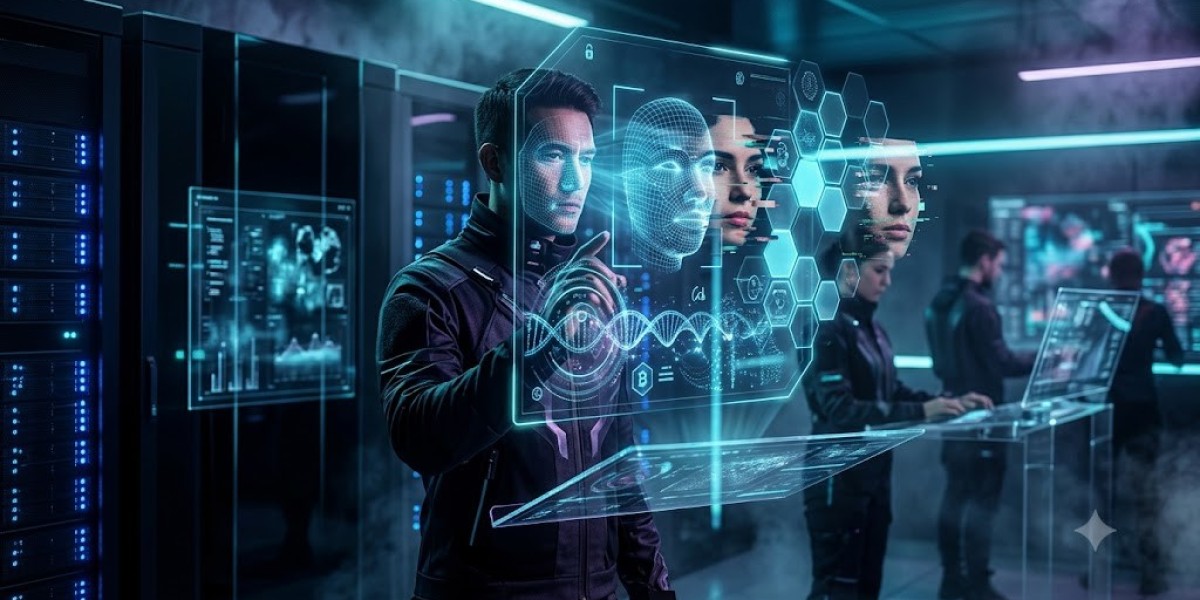

Deepfake Defense and Identity Verification in the Age of Generative Synthetic Media: Part One
The boundary between authentic human identity and algorithmically generated deception is disintegrating at an unprecedented velocity. Over the past twenty-four months, generative artificial intelligence has evolved from rudimentary, artifact-ridden visual novelties into hyper-realistic, low-latency synthetic media capable of flawlessly replicating human likeness, vocal cadence, and emotional nuances. Modern latent diffusion architectures, neural radiance fields, and autoregressive acoustic models have democratized the creation of high-fidelity deepfakes, turning what was once a fringe academic pursuit into an accessible, weaponized threat vector. In this new landscape, seeing is no longer believing, and conventional identity verification paradigms are fundamentally broken.
The societal and institutional implications of this technological inflection point are profound. Enterprises, financial institutions, critical infrastructure providers, and sovereign governments now operate in an environment where identity spoofing requires neither advanced technical infrastructure nor immense compute budgets. A threat actor with a consumer-grade graphic processing unit and a few seconds of scraped target audio or video can orchestrate automated, highly convincing social engineering operations, bypass automated Know Your Customer checks, and fabricate compelling evidentiary records. Navigating this emerging digital reality requires a paradigm shift away from visual trust toward mathematically verifiable provenance, multi-layered physiological detection, and continuous zero-trust authentication frameworks.
1. The Technical Evolution of Synthetic Media and Generative Architectures
To construct resilient defenses, one must first dissect the mechanistic advancements fueling modern synthetic media. Early generative adversarial networks operated on a dual-network premise: a generator synthesized images from latent noise, while a discriminator evaluated their authenticity, creating an adversarial feedback loop. While innovative, these architectures frequently left identifiable mathematical artifacts, such as unnatural blending boundaries, asymmetric iris reflections, and temporal inconsistencies across sequential video frames. These imperfections provided deterministic signals for legacy computer vision classifiers to reliably identify manipulated media.
The contemporary generative landscape, however, is predominantly powered by latent diffusion models, flow matching algorithms, and massive multimodal foundation models. Diffusion models function through a continuous denoising process, learning the underlying statistical distribution of human physical attributes across high-dimensional latent spaces. By operating on compressed representations, systems like Stable Diffusion, Midjourney, and state-of-the-art video generation frameworks generate anatomically coherent textures, realistic subsurface skin scattering, and complex photonic reflections that match environmental lighting conditions with forensic precision.
Concurrently, neural voice cloning has transitioned from concatenated phoneme manipulation to zero-shot transformer-based acoustic synthesis. Modern text-to-speech and voice-conversion models can isolate acoustic features, vocal tract resonances, and idiosyncratic pacing from as little as three seconds of compressed audio. When coupled with real-time facial puppetry pipelines and low-latency rendering engines, these models enable synchronous, bidirectional generative interactions. The resulting synthetic output lacks the jitter, warped geometry, and acoustic phasing of early deepfakes, making purely sensory human evaluation obsolete.
2. The Modern Attack Surface: From Executive Impersonation to KYC Exploitation
The industrialization of synthetic media has catalyzed a radical transformation in cyber threat vectors. Enterprise fraud has evolved beyond static business email compromise into multimodal executive impersonation. Cybercriminals synthesize the voice and video of Chief Financial Officers and corporate executives during live teleconferences, directing treasury staff to execute multi-million dollar wire transfers to mule accounts. Because these synthetic streams occur within trusted communication channels like enterprise video software, traditional procedural verifications are systematically circumvented by the illusion of synchronous visual authority.
Financial ecosystems and regulated digital services face an existential challenge in their onboarding and authentication pipelines. Digital Know Your Customer frameworks historically relied on automated optical character recognition of government documents paired with a live camera selfie to establish identity. Fraud syndicates now deploy programmatic virtual camera drivers to inject real-time deepfake video streams into remote identity verification webviews. These synthetic faces blink on command, turn their heads to prescribed angles, and seamlessly hold physical identity credentials, successfully defeating commercial liveness benchmarks and opening fraudulent accounts at unprecedented scale.
Beyond direct financial theft, generative media introduces catastrophic vulnerabilities into judicial processes, legal evidence preservation, and geopolitical stability. Synthetic audio recordings can be manufactured to fabricate confessions, compromise legal discovery, or manipulate public market sentiment prior to regulatory disclosures. The mere existence of weaponized synthetic media gives rise to the liar dividend: bad actors can credibly dismiss authentic, incriminating recordings as algorithmic fabrications, undermining truth and accountability across the entire information ecosystem.
3. The Systematic Failure of Legacy Identity and Authentication Controls
The enterprise authentication stack was engineered around assumptions that are no longer valid in the age of generative synthetic media. Knowledge-based authentication, which relies on secret questions and personal data, was compromised long ago by recurring data breaches; however, traditional possession-based and biometric factors are now falling victim to algorithmic synthesis. Two-dimensional facial recognition engines that match incoming camera frames against stored credential templates are trivial to deceive with generative video rendering pipelines that emulate baseline facial contours.
Voice-based customer verification, widely deployed across the global banking and telecommunications sectors, has been rendered completely unreliable. Legacy interactive voice response systems authenticate callers using automated speaker recognition algorithms that evaluate acoustic spectra against enrolled voiceprints. Because state-of-the-art neural vocoders accurately recreate harmonic formants, pitch contours, and spectral tilts, they bypass commercial voice biometric algorithms with alarming ease. Static, single-factor biometric modalities can no longer serve as authoritative trust anchors.
Furthermore, standard out-of-band verification techniques, such as Short Message Service one-time passcodes and automated telephone callbacks, are inadequate when paired with synthetic conversational agents. Threat actors deploy autonomous voice bots powered by large language models to engage with enterprise support personnel, dynamically handling counter-questions and conversational pushback in real time. The entire construct of trust based on live human conversation has been decoupled from biological presence, exposing the fundamental structural weaknesses of twentieth-century identity verification models.
4. Biometric Defense Paradigms: Active vs. Passive Liveness Detection
To counter synthetic video injection, identity verification platforms have turned to advanced liveness detection, classified into active and passive methodologies. Active liveness detection requires the user to execute randomized micro-challenges during the onboarding session, such as reading an ephemeral series of alphanumeric characters, following an unpredictable optical path on the screen, or mimicking specific asymmetrical facial expressions. The defensive platform evaluates whether the responsive movement correlates chronologically with the challenge vector, elevating the computational burden on synthetic generation engines attempting real-time rendering.
Conversely, passive liveness operates autonomously without requiring deliberate user participation, analyzing intrinsic physical and physiological markers within the video stream. Advanced passive detection models scrutinize subtle micro-expressions, saccadic eye movements, involuntary pupillary responses to dynamic screen illumination changes, and fine-grained texture gradients. Because synthetic models struggle to maintain continuous temporal consistency across minute anatomical structures over extended frame sequences, passive analysis uncovers micro-tears in the generated optical flow.
The frontier of passive biometric verification lies in remote photoplethysmography. This optical technique measures minuscule, periodic variations in skin color caused by the subcutaneous flow of blood pumped by the cardiovascular system. By analyzing diffuse reflection across multiple facial zones, defensive algorithms can extract an authentic, real-time human pulse and heart rate variability signature directly from standard video feeds. Because generative deepfakes render surface pixels without modeling biological cardiovascular hemodynamics, remote photoplethysmography provides a robust, physics-based barrier against fully synthetic faces.
5. Cryptographic Provenance, Content Authenticity, and Neural Watermarking
Detection alone is inherently reactive, locked in an escalating arms race with generative model refinement. A proactive defense necessitates mathematical provenance and cryptographically verifiable content chains. The Coalition for Content Provenance and Authenticity, known as C2PA, has established an open technical standard that binds cryptographic assertions directly to digital assets at the point of capture. Image sensors, digital cameras, and mobile operating systems can sign raw pixel arrays with hardware-bound private keys, embedding tamper-evident metadata that logs the file's entire origin and cryptographic history.
When an authenticated digital asset undergoes editing, transcoding, or distribution, each successive transformation is appended to the manifest as a cryptographically signed claim. If an intermediary bad actor uses an artificial intelligence model to modify the image or insert a synthetic face, the cryptographic hash validation fails, alerting downstream consuming platforms that the asset has been compromised. This creates a continuous verifiable ledger of custody, shifting the verification paradigm from analyzing whether a file looks fake to confirming whether its cryptographic lineage is provably genuine.
Complementing metadata-level provenance is the deployment of invisible, robust neural watermarking. Algorithms such as SynthID embed high-dimensional mathematical signatures directly into the latent representations of generated media or the inter-frame spatial frequencies of video streams. These watermarks are imperceptible to human observers and remain resilient against aggressive lossy compression, cropping, geometric warping, and analog screen re-recording. Neural watermarking allows platform operators to deterministically identify synthetic output originating from known foundation models, establishing an essential layer of attribution.
6. Multimodal Biometrics, Behavioral Analytics, and Continuous Authentication
Relying on a single checkpoint authentication event leaves organizations vulnerable to session hijacking and synthetic injection immediately following the initial login gate. Modern defense architectures are shifting toward multimodal and continuous identity verification frameworks. By simultaneously capturing and cross-correlating visual, auditory, and contextual data streams, defense systems create a multi-layered verification perimeter that is exponentially harder for synthetic models to simulate synchronously.
Multimodal systems evaluate the precise biomechanical synchronization between phonemes spoken and the physical movement of the labial, lingual, and mandibular anatomy. Even if a deepfake accurately synthesizes an executive's visual likeness and audio track independently, microsecond temporal desynchronizations between lip closure dynamics and the production of plosive consonants betray the algorithmic fabrication. Furthermore, environmental acoustic telemetry evaluates room reverberation patterns and ambient noise signatures to confirm that the vocal acoustic profile matches the physical space depicted in the camera feed.
Continuous behavioral biometrics extends this defensive posture throughout the entire duration of an authenticated session. Machine learning models unobtrusively monitor user interactions, including touchscreen pressure distributions, micro-velocity keystroke rhythms, cursor acceleration trajectories, and device orientation telemetry. Because generative agents and remote threat actors cannot replicate the ingrained neuromuscular habits of an authenticated human operator, any divergence in behavioral telemetry triggers automated step-up authentication challenges, isolating the session before data exfiltration or fraudulent transactions can materialize.
7. Hardware-Rooted Provenance and Cryptographic Content Attestation
As post-hoc probabilistic detection models struggle to outpace generative rendering advancements, the cybersecurity paradigm is undergoing a fundamental philosophical pivot: shifting from detecting what is synthetic to cryptographically proving what is real. This zero-trust media architecture relies on hardware-rooted provenance frameworks, most notably championed by the Coalition for Content Provenance and Authenticity (C2PA). Under this framework, media authenticity is not determined by analyzing pixel irregularities, but by verifying an unbroken, tamper-evident cryptographic chain of custody that begins at the microsecond of photon capture on the physical sensor.
In modern cryptographic provenance pipelines, specialized hardware security modules (HSMs) or Secure Enclaves integrated directly into camera image signal processors (ISPs) sign raw sensor capture data with an embedded, device-unique private key. This initial capture manifest encapsulates granular metadata—including GPS coordinates, precise atomic timestamps, exposure telemetry, and lens serial numbers—which is then hashed and bound to the pixel payload using standard public-key cryptography. As the asset traverses downstream post-production pipelines, editing software such as Adobe Photoshop or DaVinci Resolve appends subsequent cryptographically signed assertions detailing every edit, crop, color grading shift, or generative infill action without overwriting the antecedent capture signature.
The resilience of hardware attestation rests on mathematical immutability rather than subjective perceptual heuristics. When an end-user or verification engine ingests an attested media asset, the validation client traverses the C2PA manifest tree, confirming that intermediate digital certificates resolve to trusted root certificate authorities and that the SHA-256 hashes of the underlying media match the signed manifest layers. Any out-of-band manipulation, such as frame splicing, unauthorized pixel synthesis, or metadata stripping, invalidates the signature chain, immediately flagging the content as unverified or tampered. While adoption challenges persist around legacy hardware backwards-compatibility and metadata-stripping social media transcoders, hardware-level attestation forms the most durable bedrock for enterprise authenticity.
8. Multi-Modal Biometric Fusion and Advanced Liveness Verification
Legacy identity verification (IDV) pipelines relying on static 2D selfie matches and simple optical character recognition (OCR) document scanning have been rendered entirely obsolete by real-time diffusion rendering and facial swap injection frameworks. Modern enterprise IDV architectures must deploy multi-modal biometric fusion, synthesizing physiological, behavioral, and spatial data layers to establish authentic human presence. This multi-layered defense mandates that an attacker compromise multiple fundamentally disparate computational and physical domains simultaneously to achieve a successful spoof.
Central to this architecture is the integration of active and passive liveness verification. Passive liveness systems analyze hyper-granular physiological markers that generative algorithms routinely fail to synthesize synchronously, such as remote photoplethysmography (rPPG), pupillary light accommodation, and dynamic blood oxygenation flux across micro-vascular facial beds. These algorithms read the involuntary sub-dermal color variations caused by cardiovascular pulses across distinct facial regions, cross-referencing pulse timing with expected physiological norms. Active liveness augments this by issuing randomized, unprompted micro-challenges—such as requiring dynamic gaze-tracking across shifting on-screen geometric coordinates, continuous focal-plane adjustments, or randomized phoneme vocalizations captured alongside high-frequency acoustic telemetry.
Beyond optical and acoustic cues, multi-modal systems incorporate spatial depth sensing through Time-of-Flight (ToF) sensors or structured infrared light projectors commonly found in modern mobile hardware. Generative video injected via virtual camera drivers presents as a mathematically flat 2D projection, lacking the micro-topographical depth contours of an organic human face. By correlating 3D point-cloud mesh deformations with muscular contractions (such as the contraction of the zygomaticus major during a smile), verification engines can reliably distinguish a living, physical biological entity from a flat, high-resolution synthetic projection rendered on an emulated screen or injected video stream.
9. Real-Time Stream Interception and Defense in Video Communications
The weaponization of deepfakes has migrated aggressively into synchronous enterprise communication channels. Adversaries deploy real-time deepfake injection software to impersonate C-suite executives, legal counsel, and key financial controllers during live video conferences to authorize fraudulent multimillion-dollar capital transfers or extract sensitive intellectual property. Securing live communication streams against real-time synthetic injection requires deep integration into the operating system's media pipeline, intercepting potential exploits before video frames reach the conferencing client's transport layer.
The primary vector for real-time deepfake delivery involves virtual camera drivers (such as OBS Virtual Camera, ManyCam, or custom DirectShow filters) that intercept and replace raw hardware camera feeds with rendered synthetic video streams. Enterprise defense platforms mitigate this by enforcing kernel-level hardware attestation, verifying that video streams originate exclusively from physically connected, cryptographically identified USB or PCIe imaging devices while systematically blocking unauthorized virtual driver abstractions. Furthermore, these defenses inspect the operating system's process space to detect injection hooks, dynamic-link library (DLL) injection, and unauthorized frame buffer manipulation targeting video conferencing binaries like Zoom, Microsoft Teams, and Webex.
At the application layer, real-time stream analysis engines compute frame-to-frame temporal coherence metrics with latency thresholds under 50 milliseconds. These detectors monitor for micro-jitter, localized high-frequency boundary blurring around the jawline and hair perimeter, and subtle acoustic-to-visual synchronization lag (phoneme-to-viseme latency). When anomaly thresholds are breached during a live call, the system can automatically downgrade the session's trust score, flag the participant to enterprise security operation centers (SOCs), and enforce out-of-band authentication challenges before sensitive operational or financial actions can proceed.
10. Regulatory Frameworks, Compliance, and Legal Liability
The exponential proliferation of synthetic media has catalyzed an unprecedented global regulatory response, moving synthetic media risk management from an operational IT concern to a mandatory legal and compliance imperative. Regulatory frameworks worldwide are establishing strict compliance baselines, compelling organizations that develop, deploy, or consume generative AI systems to implement rigorous watermarking, provenance tracking, and deepfake mitigation controls under pain of severe civil and criminal penalties.
The European Union's AI Act represents the most comprehensive global framework to date, imposing legally binding transparency and traceability mandates. Under the EU AI Act, deployers of AI systems that generate or manipulate image, audio, or video content constituting deepfakes must explicitly disclose that the content has been synthetically generated or altered, utilizing machine-readable and tamper-evident labeling standards. In parallel, United States federal and state legislation—such as the federal DEEP FAKES Accountability Act and emerging state-level digital personality protection statutes—creates direct civil liability for unauthorized commercial exploitation, political disinformation, and non-consensual synthetic impersonation, while setting strict evidentiary thresholds for synthetic media presented in judicial proceedings.
From an enterprise compliance perspective, organizations face escalating exposure under existing corporate governance and fiduciary liability doctrines. Financial institutions operating under Know Your Customer (KYC) and Anti-Money Laundering (AML) mandates face massive regulatory fines if synthetic identities bypass their onboarding controls to facilitate illicit capital flight. Boards of directors and chief risk officers are increasingly held liable for failures in duty of care if adequate synthetic defense controls are not implemented to prevent identity spoofing, unauthorized wire transfers, or reputational extortion targeting corporate leadership.
11. Strategic Playbook: Building an Enterprise Deepfake Incident Response Plan
Because no individual detection algorithm or security control provides absolute protection against state-of-the-art synthetic media, enterprises must establish a comprehensive, actionable Deepfake Incident Response Plan (DIRP). This framework integrates technical defense layers, zero-trust organizational workflows, rapid forensic triage, and crisis communications to rapidly neutralize deepfake-driven social engineering, financial fraud, and brand impersonation campaigns.
An enterprise DIRP must be structured across four foundational operational phases:
Phase 1: Verification Hardening and Zero-Trust Workflows. Organizations must eliminate single-channel human authority protocols. Any high-impact action—such as wire transfers exceeding defined thresholds, credential provisioning, or changes to vendor banking details—must mandate multi-channel, multi-party verification. Executive communications requesting urgent or out-of-band operational exceptions must require cryptographic challenge-response authentication, such as FIDO2 hardware security keys, or the use of pre-shared, out-of-band verbal authentication cryptograms that are rotated regularly and never transmitted over digital networks.
Phase 2: Automated Threat Detection and Triage. Enterprise email security gateways, endpoint detection agents, and communication platforms must continuously ingest inbound media, running real-time forensic scanning across frequency spectra, biometric markers, and C2PA manifest chains. Automated telemetry should assign risk scores to all multimedia files and live streams, immediately isolating high-risk assets and alerting the security operations team when synthetic anomalies are detected.
Phase 3: Forensic Isolation and Attribution. When a synthetic media attack is confirmed or actively underway, the incident response team must immediately isolate affected communication channels and capture the raw, uncompressed media payload to preserve evidentiary integrity. Forensic specialists execute spectral analysis, PRNU extraction, and reverse-engineering of GAN/diffusion artifacts to determine the generative model architecture used, establish adversary attribution, and preserve forensic artifacts in accordance with judicial chain-of-custody standards.
Phase 4: Containment, Revocation, and Crisis Communication. The organization executes predefined containment playbooks: invalidating compromised session tokens, freezing targeted accounts, notifying downstream financial institutions, and deploying pre-drafted, transparent communication templates to stakeholders, regulators, and the public to prevent brand contagion and mitigate market volatility resulting from synthetic executive statements.
Conclusion: Navigating the Epistemic Crisis in the Synthetic Media Era
The rapid maturation of generative artificial intelligence has dissolved the historical correlation between sensory perception and objective reality. In this new operating environment, seeing is no longer believing. The convergence of hyper-realistic generative diffusion models, real-time voice cloning, and neural rendering has inaugurated a profound epistemic crisis, threatening the foundational trust mechanisms that underpin global commerce, corporate governance, legal institutions, and democratic discourse.
Meeting this existential challenge requires a fundamental transition away from brittle, reactive detection paradigms toward deeply integrated, layered security architectures. Defeating sophisticated synthetic deception demands the synthesis of hardware-rooted cryptographic provenance, resilient multi-modal biometric fusion, kernel-level stream attestation, and uncompromising zero-trust organizational protocols. Technology alone, however, cannot serve as a complete panacea; technological controls must be reinforced by rigorous international regulatory standards, clear legal liability frameworks, and continuous institutional vigilance.
Organizations that proactively architect their identity verification systems and operational workflows for the synthetic era will not only insulate themselves against catastrophic fraud and reputational destruction, but will also help preserve the integrity of the digital ecosystem. In an era where any voice can be synthesized and any face can be rendered, resilience belongs to those who build verification architectures capable of proving digital truth with mathematical certainty.