
Leadership is often discussed through visible qualities.
Vision. Confidence. Communication. Experience. Performance. Decision-making.
These qualities matter, but they do not tell the entire story.
Behind every significant leadership decision is a broader environment of systems, incentives, governance structures, economic relationships, and institutional expectations. These forces can influence what leaders are able to accomplish, how organizations behave, and whether today's success can become tomorrow's lasting impact.
The challenge is that much of this architecture remains invisible.
Leaders see the decision.
They may not always see the structure influencing the decision.
They see the outcome.
They may not always see the system producing the outcome.
This distinction becomes increasingly important for people operating at high levels of responsibility.
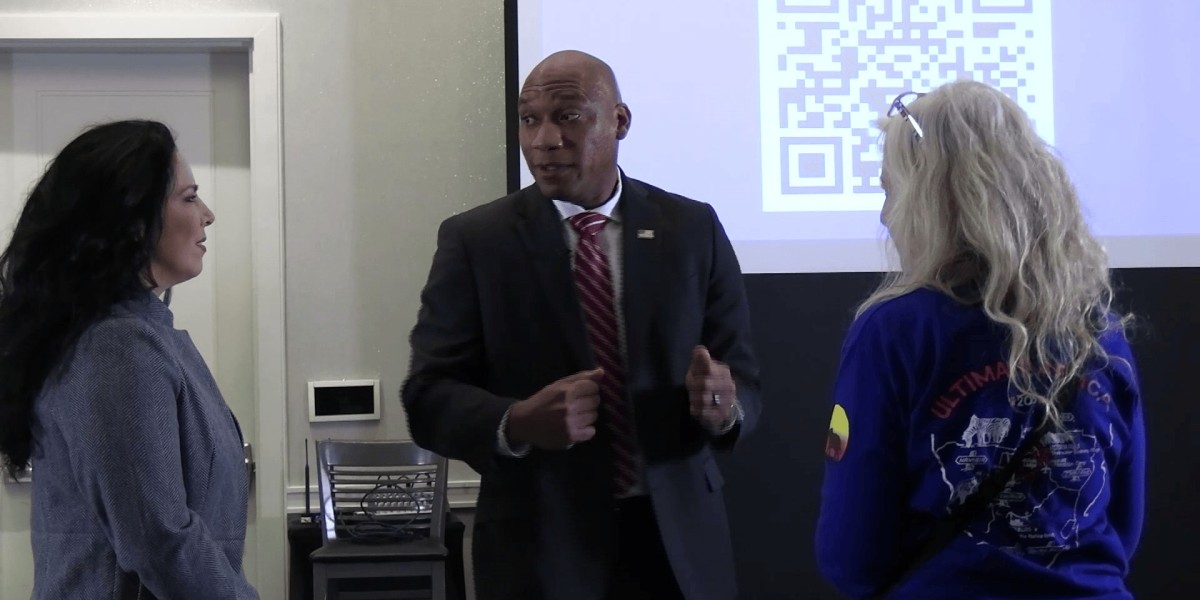
Antomius Wise brings attention to this often-overlooked layer through institutional keynotes, workshops, executive education, strategic philanthropy conversations, and private executive briefings. His work is centered on helping leaders and institutions develop structural clarity—the ability to recognize the forces beneath visible outcomes.
Leadership Does Not Exist in Isolation
No leader operates independently of a system.
An executive works within a governance structure. A founder operates within an economic environment. A wealth advisor works within fiduciary and institutional relationships. A philanthropic leader operates within charitable, organizational, and community structures.
Even the most capable individual is influenced by the architecture surrounding their decisions.
That does not diminish individual responsibility.
Instead, it expands the definition of leadership.
A leader who understands the system can begin asking questions that go beyond immediate execution.
What incentives are shaping behavior?
Where does authority actually exist?
How are decisions being made?
Which structures support accountability?
What economic forces are influencing the environment?
What assumptions are built into the current approach?
And what happens if the surrounding conditions change?
These questions create a deeper form of leadership awareness.
The Hidden Cost of Operating Without Structural Clarity
Many high performers are exceptionally good at responding to visible challenges.
They know how to execute.
They know how to solve problems.
They know how to produce results.
But a recurring challenge may not be solved simply by applying more effort.
If an incentive continues to encourage the wrong behavior, the problem can return.
If governance remains unclear, accountability can remain difficult.
If an organization grows without developing the appropriate institutional structure, complexity can eventually overwhelm existing processes.
If capital is deployed without understanding the economic environment surrounding it, the intended impact may not develop as expected.
Structural clarity helps leaders move from repeatedly responding to symptoms toward examining the architecture behind them.
The goal is not to complicate simple decisions.
It is to recognize when a seemingly simple decision is connected to a much larger system.
From Financial Success to Structural Understanding
Financial achievement can create options.
It can also create new responsibilities.
As individuals and families accumulate resources, decisions increasingly involve questions of governance, legacy, institutional relationships, and long-term planning.
This is particularly relevant for high-income professionals, founders, donors, family offices, and wealth-advisor networks.
At this level, financial literacy alone may not answer every question.
Leaders may also need to understand the structures surrounding capital.
How is authority organized?
How are long-term decisions governed?
How can resources support institutional objectives?
What systems influence economic outcomes?
How can a family's priorities remain meaningful across generations?
These are structural questions.
They require leaders to think beyond the balance sheet and consider the broader architecture in which wealth and influence operate.
Rethinking Strategic Philanthropy
Philanthropy is often associated with generosity.
But strategic philanthropy can involve another dimension: understanding systems.
A contribution may provide immediate support, but long-term impact can depend on governance, institutional capacity, economic infrastructure, mission alignment, and the sustainability of the organization receiving or deploying resources.
This creates an opportunity to ask better questions.
Is the structure capable of supporting the intended mission?
Does governance reinforce accountability?
How does capital interact with the surrounding economic environment?
What conditions are necessary for impact to continue?
How can philanthropic decisions contribute to durable community and economic outcomes?
Antomius Wise approaches strategic philanthropy as an educational exploration of these structural relationships.
The focus is not transactional.
It is about helping donors, founders, and philanthropic leaders understand how structures can influence the full scope of their impact.
Institutional Thinking for Organizations in Transition
Organizations rarely remain exactly as they began.
A startup can become a growing enterprise.
A growing enterprise can become an institution.
A founder-led organization can eventually require broader governance and distributed decision-making.
Each transition introduces new questions.
What worked at one stage may not work at another.
The structures that supported early growth may need to evolve. Leadership responsibilities may change. Incentives may need to be reconsidered. Governance may require greater discipline.
Institutional thinking helps leaders recognize these transitions before they become structural constraints.
Instead of focusing exclusively on current performance, leaders can examine whether the organization has the architecture necessary for its next stage.
This perspective is particularly relevant for executive leadership teams and entrepreneurial organizations seeking to build institutions rather than simply achieve short-term growth.
The Value of a Different Kind of Executive Education
Executive education can provide more than information.
At its strongest, it can introduce leaders to new ways of interpreting familiar situations.
A keynote can challenge assumptions.
A workshop can create space for deeper examination.
An executive education program can provide frameworks for understanding complex relationships among governance, economic systems, incentives, philanthropy, and institutional decision-making.
Antomius Wise's approach centers on changing how leaders think, not simply what they hear.
The objective is to give participants mental models that remain relevant beyond the engagement.
When leaders return to their organizations, the value of the conversation can continue through the questions they ask and the structures they examine.
Conversations Before the Stakes Get Higher
Some of the most important leadership conversations happen before an issue becomes urgent.
A private executive briefing can create space for leaders to examine complex questions before they reach a larger meeting, strategic planning session, or institutional decision.
These conversations can address strategic philanthropy, governance discipline, economic systems, institutional thinking, incentive alignment, and family legacy education.
The setting is intentionally focused.
Executive teams, wealth-advisor networks, philanthropic leaders, and high-income founders can step away from immediate execution and examine the structural context surrounding an important question.
Sometimes clarity comes from having more information.
Sometimes it comes from seeing the existing information differently.
Designing for the Future
Long-term impact cannot be separated from structure.
A decision that works today may need to adapt tomorrow.
Leadership changes.
Markets evolve.
Organizations grow.
Families expand.
Institutions encounter new challenges.
Philanthropic priorities shift.
A durable structure therefore needs enough discipline to maintain purpose and enough flexibility to respond to changing conditions.
This is why governance, institutional thinking, economic understanding, and incentive alignment matter.
They create the architecture through which long-term objectives can be pursued.
Making Structural Clarity Part of Leadership
The next level of leadership is not always about doing more.
Sometimes it is about seeing more.
Seeing the incentives behind behavior.
Seeing the governance behind accountability.
Seeing the economic systems behind opportunity.
Seeing the institutional structures behind growth.
Seeing the architecture behind philanthropic impact.
Antomius Wise brings these perspectives into rooms where leaders are making decisions that extend beyond the immediate moment.
Through keynote speaking, workshops, executive education, strategic philanthropy conversations, and private executive briefings, the focus remains on making invisible structures more visible.
Because meaningful leadership is not only about producing an outcome.
It is about understanding the system that produces it.
And when leaders can recognize that system, they can begin thinking differently about what they are building, how they are governing it, and whether it is capable of creating value long after the original decision has been made.