
A career in accounting and finance is no longer limited to traditional accounting roles. Companies today need professionals who can understand financial data, analyse business performance, prepare budgets, and support management in making financial decisions.
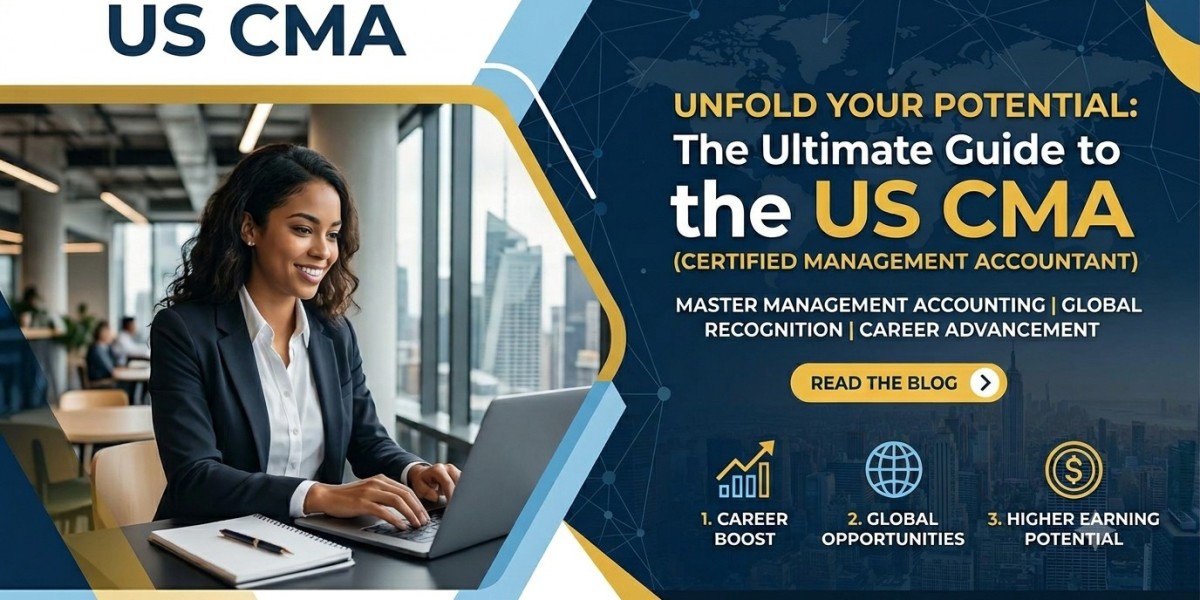
This is one reason the US CMA course has become an option for students and professionals looking to build skills in management accounting and corporate finance.
If you are considering the US CMA, understanding the course structure, subjects, preparation requirements, and career opportunities can help you decide whether it matches your goals.
What Is the US CMA Course?
US CMA stands for Certified Management Accountant. The certification is offered by the Institute of Management Accountants (IMA).
The qualification focuses on management accounting and financial management rather than only traditional accounting.
The curriculum covers areas such as:
Financial planning
Performance management
Cost management
Internal controls
Financial statement analysis
Corporate finance
Risk management
Investment decisions
Strategic planning
This makes the qualification relevant to professionals who want to understand how financial information supports business decisions.
Who Can Consider a US CMA Course?
The US CMA can be considered by:
Commerce graduates
Finance students
Accounting professionals
MBA or management students
Working professionals
Candidates interested in corporate finance
Students from related academic backgrounds may already be familiar with some accounting concepts, while beginners may need additional time to understand the fundamentals.
US CMA Course Structure
The US CMA examination is divided into two parts.
Part 1: Financial Planning, Performance, and Analytics
Part 1 focuses on areas such as:
External financial reporting decisions
Planning, budgeting, and forecasting
Performance management
Cost management
Internal controls
Technology and analytics
Part 2: Strategic Financial Management
Part 2 covers areas including:
Financial statement analysis
Corporate finance
Business decision analysis
Enterprise risk management
Capital investment decisions
Professional ethics
Both parts require conceptual understanding as well as application-based preparation.
What Skills Can You Develop?
One of the key advantages of the US CMA course is its focus on using financial information for business decision-making.
During preparation, you can develop skills related to:
Financial Analysis
Understanding financial statements and using financial information to analyse business performance.
Budgeting and Forecasting
Learning how organisations plan their finances and estimate future performance.
Cost Management
Understanding costs and how businesses can use cost information when making decisions.
Decision-Making
Applying financial concepts to different business situations.
Strategic Finance
Understanding how financial decisions can affect the broader business.
Career Opportunities After US CMA
The US CMA qualification can be relevant to several accounting, finance, and management-related roles.
Depending on your qualifications and experience, you may explore positions such as:
Management Accountant
Financial Analyst
Cost Accountant
FP&A Analyst
Finance Analyst
Budget Analyst
Business Analyst
Corporate Finance roles
Career progression will depend on your skills, experience, location, and individual employer requirements.
How Should You Prepare for US CMA?
A structured preparation plan can make the syllabus easier to manage.
Start by understanding the syllabus and dividing it into smaller topics.
Then:
Build your basic concepts.
Attend lectures or study the relevant material.
Practise questions regularly.
Make short revision notes.
Revisit difficult topics.
Take mock tests.
Analyse your mistakes.
Don't leave question practice until the end. Application-based practice should be part of your preparation from the beginning.
Is US CMA Suitable for Working Professionals?
Yes, working professionals can consider the qualification if they are interested in management accounting or finance.
However, balancing work and exam preparation requires proper planning.
A realistic weekly study schedule is generally more sustainable than trying to study for several hours every day despite a busy work routine.
Choosing the Right US CMA Course
Before joining a US CMA course, compare the available learning options carefully.
Look at:
Faculty experience
Course structure
Study material
Question practice
Mock tests
Doubt-solving support
Class timings
Online or offline learning format
Revision support
The course should fit your learning style and schedule.
Why Consider The WallStreet School?
The WallStreet School focuses on professional finance education and offers programs for candidates looking to build careers in areas such as US CMA, CFA, ACCA, FRM, and financial modelling.
For students considering US CMA, comparing the curriculum, faculty, learning format, and preparation support can help them understand whether the program fits their requirements.
Final Thoughts
The US CMA course can be a relevant option for candidates interested in management accounting, financial analysis, planning, and business decision-making.
It offers a specialised approach to finance and accounting and can complement academic qualifications and practical experience.
Before enrolling, understand the syllabus, exam requirements, preparation time, and career direction you want to pursue. A structured course combined with regular self-study and practice can help you approach the qualification with greater clarity.