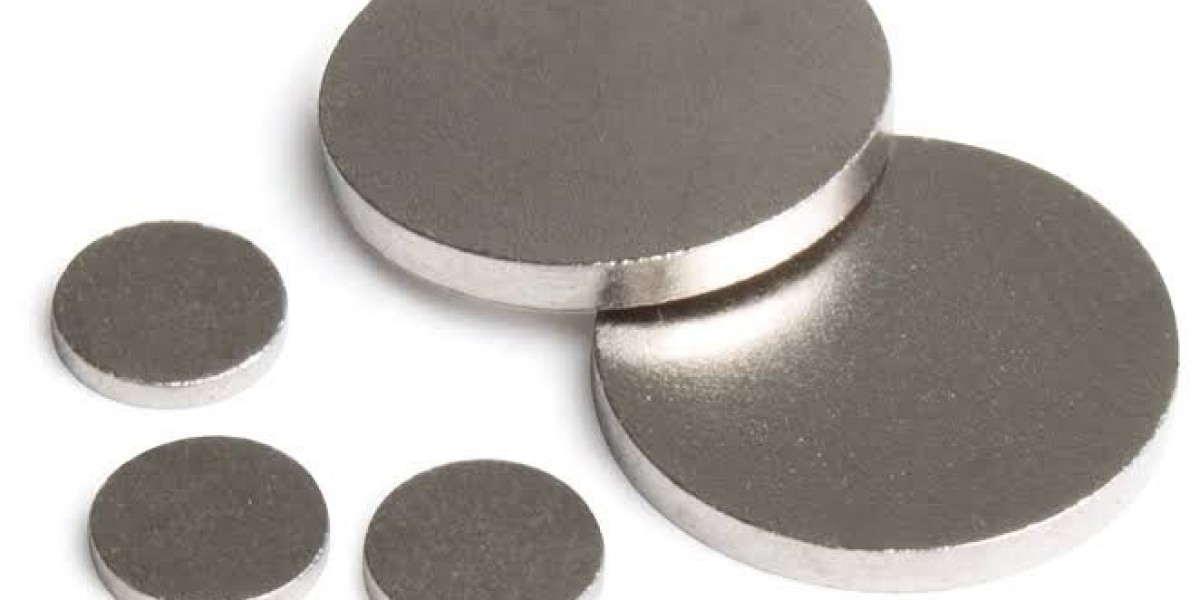

Samarium cobalt magnets pair samarium with cobalt to form permanent magnets that hold magnetic strength at high temperatures. They resist demagnetization under heat and vibration and oxidation, which suits equipment that must work without failure. Motors and sensors and actuators and magnetic couplings use them, and buyers pick them where ordinary magnets fade. Heat tolerance plus reliability explains their niche across European industry.
A recent study by Markntel Advisor highlights that the Europe samarium cobalt magnet industries were valued at USD 85 million in 2025 and are projected to grow from USD 87.97 million in 2026 to USD 128.14 million by 2032, registering a CAGR of 6.47% during 2026–2032. Germany holds 28.25% in 2026, while Sm2Co17 takes 67% of product types and aerospace and defense takes 37% of end use.
High Grade Samarium Cobalt Magnets Hold Strength Where Heat Climbs
Sm2Co17 leads product types because its magnetic strength and heat performance beat the simpler SmCo5 variant. Aerospace and defense systems that run above 300°C rely on it for actuators and sensors and satellite parts, where failure carries high costs. Industrial motors and turbines and advanced electronic systems also favor it for steady performance under extreme conditions. Energy density plus resistance to demagnetization keeps it ahead of alternatives.
Aerospace and defense takes the leading end-use portion because mission systems need magnets that hold performance under extreme thermal and environmental stress. European defense budgets topped USD 402 billion during 2025, which funds aircraft and satellite and space programs at scale. Space agencies and national programs buy high-reliability parts in multi-year pipelines, which gives suppliers steady orders rather than one-off sales. Reliability thus outweighs price in this segment.
German Workshops and Motor Makers Anchor Precision Magnet Work
Germany holds the leading country portion because its aerospace and industrial machinery base concentrates precision engineering. Factories in Germany and France and Italy build motors and automation parts that need stable magnets, and suppliers serve them with short lead times. Industrial users now adopt high-efficiency motors under EU Ecodesign rules, which mandate better energy performance across equipment. Regulation plus factory depth keeps German buyers at the center of orders.
Motors take a central application role, since high-efficiency industrial motors need magnets that hold torque across heat and load swings. Sensors and actuators use smaller grades for precise movement and feedback, while magnetic couplings transfer force without contact wear. Industrial machinery buyers value long life and low maintenance, which favors grades that survive harsh plant floors. Application breadth thus spreads orders beyond aerospace alone.
Space Programs and Raw Material Rules Shape Magnet Supply
Space programs drive orders, since the European Space Agency raised its budget to approximately USD 8 billion for 2025 and approved a record funding cycle near USD 25 billion. Galileo and Copernicus systems need navigation and earth observation parts, and each satellite carries actuators and sensors and traveling wave tubes that need heat-resistant magnets. Launch frequency keeps rising across Europe, which turns space work into recurring volume for magnet makers.
Raw material policy shapes supply, since the European Commission Critical Raw Materials Act targets 10% domestic extraction and 40% processing capacity by 2030. The Net-Zero Industry Act promotes clean technology manufacturing and targets 40% domestic capacity by 2030, which lifts demand for high-performance magnetic parts. Suppliers answer by localizing supply chains, while buyers seek domestic sources to cut import dependence. Policy thus steadies a fragile supply base.
Electric Vehicles and Cost Pressures Test Magnet Makers Alike
Electric vehicles and wind energy open outlets, since Europe added 15 GW of wind capacity during 2024 and targets up to 30 GW yearly. WindEurope data put annual capacity additions above 20 GW, which supports specialized magnet uses in generators. Vehicle makers seek localized supply, and one planned Estonian rare-earth facility aims to support parts for up to 1 million vehicles each year. Heat-resistant vehicle subsystems need aerospace reliability.
Cost limits wider use, since samarium and cobalt count as critical raw materials and supply depends on imports from few countries. Cobalt prices swing with disruptions in the Democratic Republic of Congo, which squeezes producer margins. Energy costs and compliance duties add further pressure, so makers struggle to price against cheaper alternatives. Cost-sensitive buyers in automotive and large-scale energy thus pick substitutes, which confines samarium cobalt to high-value niches.
Recycling and Local Supply Will Decide How Europe Secures Rare Earths
The years ahead will test whether recycling and local processing cut import dependence fast enough to widen use beyond aerospace and defense. Makers that secure material and prove heat performance stand to win space and clean energy orders, while others stay confined to small niches. Europe holds engineering depth, and magnet supply will shape how far that depth converts into production.