
Introduction
Hair loss is one of the most common cosmetic concerns affecting both men and women. It can occur at different ages and may result from genetic factors, hormonal changes, aging, nutritional deficiencies, medical conditions, stress, and lifestyle habits. For many people, excessive hair loss, thinning hair, a receding hairline, and bald patches can affect their physical appearance and self-confidence.
A hair transplant is an advanced hair restoration procedure designed to restore hair growth in areas affected by permanent hair loss. It involves transferring healthy hair follicles from a donor area, usually the back or sides of the scalp, to areas where hair has become thin or disappeared.
With advancements in modern hair restoration techniques, hair transplantation has become a popular option for individuals seeking natural-looking and long-lasting results. Techniques such as Follicular Unit Extraction (FUE), Follicular Unit Transplantation (FUT), and Direct Hair Implantation (DHI) allow surgeons to customize treatment according to individual hair loss patterns and donor hair availability.
Whether someone is experiencing early hair thinning, a receding hairline, or extensive baldness, understanding the hair transplant process can help them make informed decisions.
This comprehensive article covers everything about hair transplantation, including its causes, techniques, benefits, procedure, recovery, side effects, cost, aftercare, and frequently asked questions.
What Is a Hair Transplant?
A hair transplant is a surgical procedure in which healthy hair follicles are taken from one part of the body and implanted into areas experiencing hair loss. The area from which follicles are extracted is known as the donor area, while the area receiving transplanted follicles is called the recipient area.
The back and sides of the scalp are commonly selected as donor areas because hair follicles in these regions are generally more resistant to the hormonal effects responsible for hereditary hair loss.
During the procedure, individual hair follicles or follicular units are carefully extracted, prepared, and implanted into the affected areas. Once the transplanted follicles establish themselves, they can produce new hair that grows naturally.
Hair transplantation is commonly performed to address:
Male pattern baldness.
Female pattern hair loss in selected cases.
Receding hairlines.
Thinning hair.
Bald patches.
Hair loss caused by injuries and burns.
Certain types of scar-related hair loss.
Eyebrow thinning or loss.
Beard and moustache hair loss.
The primary objective is to restore hair coverage while maintaining a natural appearance that complements the patient's facial features.
What Are the Main Causes of Hair Loss?
Before considering hair transplantation, it is important to understand the underlying cause of hair loss. Some conditions cause temporary hair shedding, while others result in permanent damage to hair follicles.
1. Genetic Hair Loss
Genetic hair loss, medically known as androgenetic alopecia, is one of the most common causes of baldness.
It affects both men and women. In men, it usually begins with a receding hairline or thinning around the crown. In women, it commonly causes gradual thinning across the top of the scalp.
2. Hormonal Imbalances
Hormones play an important role in regulating hair growth. Changes in thyroid hormones and other hormonal imbalances can contribute to excessive hair shedding and reduced hair density.
3. Nutritional Deficiencies
Hair follicles require essential nutrients to maintain healthy growth. Deficiencies in iron, zinc, protein, vitamin D, and other nutrients may contribute to hair thinning.
4. Stress and Anxiety
Physical and emotional stress can disrupt the normal hair growth cycle. A condition called telogen effluvium may cause increased hair shedding several weeks or months after a stressful event.
5. Aging
As people grow older, hair follicles may gradually become less active. Hair strands can become thinner, growth may slow down, and overall hair density may decrease.
6. Medical Conditions
Certain autoimmune diseases, scalp infections, and inflammatory conditions can cause hair loss. Some conditions may permanently damage hair follicles and create bald patches.
7. Medications
Some medications and medical treatments, including chemotherapy, can cause temporary or permanent hair loss.
Identifying the underlying cause is essential because not every type of hair loss requires a transplant. Some patients may achieve improvement through medication, nutritional correction, or other non-surgical treatments.
Types of Hair Transplant Techniques
Modern hair transplantation offers several techniques to restore hair growth. The most appropriate method depends on the patient's hair loss pattern, donor hair availability, scalp condition, treatment goals, and medical history.
1. Follicular Unit Extraction (FUE)
Follicular Unit Extraction, commonly known as FUE, is one of the most widely used hair transplantation techniques.
In this procedure, individual follicular units are extracted from the donor area using a specialized micro-punch instrument. The harvested follicles are then prepared and implanted into the recipient area.
How FUE Hair Transplant Works
The procedure generally involves the following steps:
The surgeon examines the scalp and identifies suitable donor and recipient areas.
The donor area is trimmed or shaved as required.
Local anesthesia is administered to minimize discomfort.
Individual hair follicles are extracted using a specialized instrument.
The extracted grafts are carefully preserved and prepared.
Small recipient sites are created in the areas affected by hair loss.
The harvested follicles are implanted according to the planned hairline and natural hair growth direction.
Benefits of FUE Hair Transplant
Minimally invasive extraction technique.
No long linear donor-area scar.
Generally faster donor-area healing than FUT.
Suitable for various hair loss patterns.
Precise placement of individual follicular units.
Small extraction marks usually become less noticeable after healing.
FUE is particularly popular among individuals who prefer shorter hairstyles and want to avoid a linear scar.
2. Follicular Unit Transplantation (FUT)
Follicular Unit Transplantation, also known as FUT or the strip method, is another established hair restoration technique.
In this procedure, a narrow strip of scalp tissue containing healthy hair follicles is removed from the donor area, usually the back of the head. The strip is then carefully divided into individual follicular units under magnification.
These grafts are subsequently implanted into the areas experiencing hair loss.
How FUT Hair Transplant Works
The surgeon examines the donor area.
Local anesthesia is administered.
A strip of scalp tissue is surgically removed.
The donor wound is closed using appropriate surgical techniques.
Individual follicular units are separated from the strip.
Recipient sites are created in the treatment area.
The prepared grafts are implanted according to the hair restoration plan.
Benefits of FUT Hair Transplant
Can provide a substantial number of grafts in one session.
Does not require complete shaving of the donor area.
Can be suitable for patients requiring extensive hair restoration.
Allows careful preparation of follicular units.
May help maximize graft harvesting in selected patients.
The main limitation of FUT is the linear scar left in the donor area. Patients should discuss their hairstyle preferences and scarring considerations with the surgeon before selecting this technique.
3. Direct Hair Implantation (DHI)
Direct Hair Implantation, commonly known as DHI, is a hair implantation approach that uses a specialized implanter pen.
In most cases, follicles are extracted using the FUE technique and then implanted using the DHI method.
The implanter pen allows the surgeon to place individual follicles into the recipient area while controlling the depth, angle, and direction of implantation.
How DHI Hair Transplant Works
Hair follicles are extracted from the donor area.
The extracted grafts are examined and prepared.
Individual follicles are loaded into a specialized implanter pen.
The surgeon implants the follicles into the recipient area.
The placement is adjusted to achieve a natural hairline and appropriate distribution.
Benefits of DHI
Precise follicle implantation.
Greater control over implantation angles.
Useful for detailed hairline restoration.
May be suitable for selected patients who prefer limited recipient-area shaving.
Allows controlled placement of individual follicles.
DHI is not automatically better than conventional FUE implantation. The final results depend on surgical expertise, graft handling, patient suitability, and proper treatment planning.
Who Is an Ideal Candidate for Hair Transplant?
Hair transplantation is suitable for selected individuals experiencing permanent hair loss. However, not everyone is an appropriate candidate.
A detailed medical and scalp assessment is necessary before recommending surgery.
An ideal candidate generally has:
Sufficient healthy donor hair.
A suitable pattern of permanent hair loss.
Good general health.
A scalp without active untreated infection.
Realistic expectations about hair density.
A stable or reasonably predictable hair loss pattern.
Enough donor follicles to cover the intended treatment area.
Hair Transplant for Men
Male pattern baldness is one of the most common reasons men seek hair transplantation.
It can cause a receding hairline, thinning temples, crown baldness, and extensive hair loss.
Hair transplantation can restore coverage in these areas when sufficient healthy donor follicles are available.
Hair Transplant for Women
Women can also benefit from hair transplantation in selected cases.
Common concerns include a receding hairline, localized thinning, traction alopecia, and certain types of permanent hair loss.
However, women with diffuse thinning throughout the scalp may not be suitable candidates because the donor area may also have reduced density.
Hair Transplant for Young Adults
Young adults experiencing hair loss should undergo careful evaluation before considering surgery.
Hair loss can continue progressing over time. A transplant performed too early may create an unnatural appearance if surrounding natural hair continues to disappear.
A long-term hair restoration plan is therefore important.
Hair Transplant Procedure: Step-by-Step Process
A hair transplant involves several stages, starting with an initial consultation and ending with the implantation of healthy follicles.
Step 1: Initial Consultation
The first step is a consultation with a qualified hair transplant surgeon.
During this appointment, the surgeon evaluates the patient's hair loss pattern, scalp condition, donor hair density, and medical history.
The patient's expectations and treatment goals are also discussed.
Step 2: Hairline Design
Hairline design is one of the most important aspects of hair transplantation.
The surgeon considers facial proportions, age, existing hairline, natural hair direction, donor capacity, and the possibility of future hair loss.
The goal is to create a natural-looking hairline that suits the patient's appearance and remains appropriate as they age.
Step 3: Preparation and Anesthesia
The scalp is cleaned and prepared before the procedure.
Local anesthesia is administered to numb the donor and recipient areas. Patients generally remain awake during the procedure.
Step 4: Hair Follicle Extraction
Depending on the selected technique, individual follicles are extracted using FUE or harvested through the FUT strip method.
Careful extraction is important to minimize follicle damage and protect the donor area.
Step 5: Graft Preparation
The harvested follicles are examined under magnification and separated according to the number of hairs in each follicular unit.
Proper graft preservation and handling help maintain follicle viability.
Step 6: Recipient Site Creation
Small openings are created in the recipient area.
Their direction, angle, and distribution are carefully planned to match natural hair growth.
Step 7: Hair Follicle Implantation
The prepared grafts are implanted into the recipient sites.
Single-hair grafts are commonly used along the front hairline to create a natural transition, while multi-hair grafts may be placed behind the hairline to improve density.
Step 8: Postoperative Instructions
After the procedure, patients receive instructions regarding scalp washing, sleeping position, medications, physical activity, and follow-up appointments.
Following these instructions is essential for proper recovery.
How Long Does a Hair Transplant Take?
The duration of a hair transplant depends on the number of grafts, selected technique, surgical complexity, and clinical workflow.
A typical procedure may take approximately four to eight hours. Larger sessions may take longer or require more than one treatment session.
Patients generally remain awake under local anesthesia throughout the procedure.
How Many Grafts Are Required for a Hair Transplant?
The number of grafts required varies according to the size of the bald area, existing hair density, donor capacity, and desired results.
A graft is a naturally occurring follicular unit that may contain one, two, three, or occasionally more hairs.
The following figures are general estimates:
Hair Loss Area | Approximate Grafts |
|---|---|
Minor hairline restoration | 500–1,000 |
Receding hairline | 1,000–1,800 |
Front and temples | 1,500–2,500 |
Front and mid-scalp | 2,000–3,500 |
Crown restoration | 1,000–2,500 |
Extensive baldness | 3,000–5,000+ |
These numbers are not fixed treatment recommendations. A surgeon must evaluate the donor area and recipient area before deciding how many grafts can safely be transplanted.
Overharvesting donor hair can result in visible thinning and an uneven appearance.
Benefits of Hair Transplant
Hair transplantation offers several benefits for individuals experiencing permanent hair loss.
1. Natural-Looking Hair Growth
Modern techniques allow surgeons to recreate natural-looking hairlines by carefully controlling the placement, angle, and direction of transplanted follicles.
2. Long-Lasting Results
Transplanted follicles taken from suitable donor areas generally retain many of their original characteristics and can produce hair for many years.
3. Improved Physical Appearance
Hair restoration can improve hair coverage, restore a receding hairline, and create a fuller appearance.
4. Increased Self-Confidence
Hair loss may affect how individuals feel about their appearance. Successful hair restoration can help improve confidence and personal comfort.
5. Low Daily Maintenance
Once transplanted hair has grown and healing is complete, it generally requires the same maintenance as natural hair.
Patients can wash, trim, and style it normally.
6. Customized Treatment
Hair transplantation can be customized according to the patient's facial features, hair characteristics, donor capacity, and hair loss pattern.
7. Long-Term Hair Restoration Option
Unlike temporary cosmetic hair coverage, transplantation relocates existing follicles into areas affected by permanent hair loss.
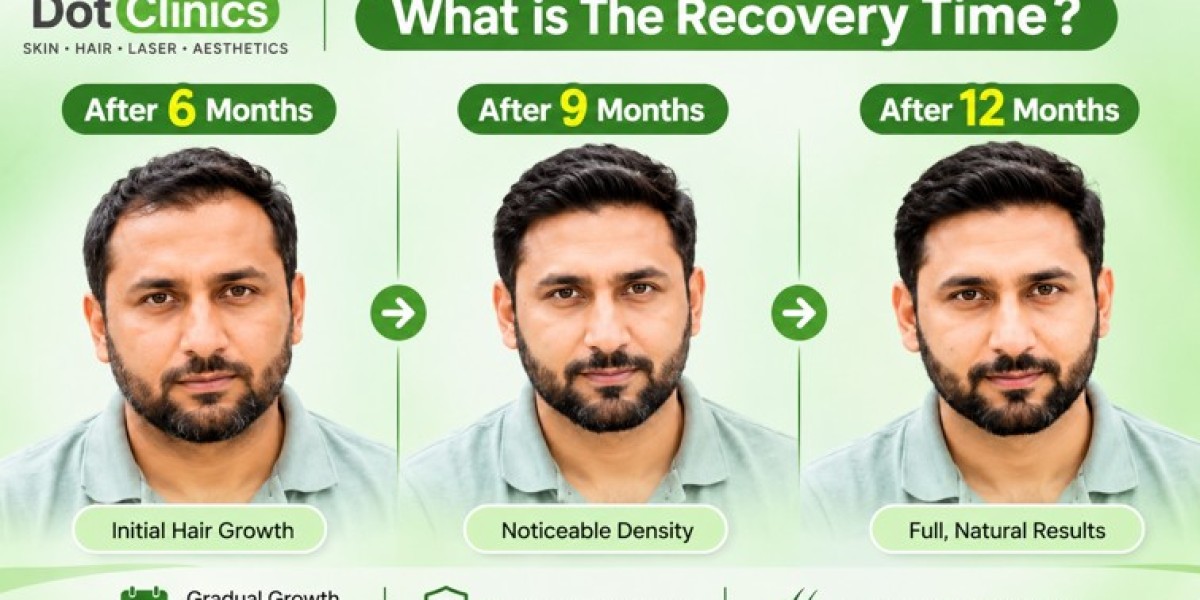
Hair Transplant Recovery Timeline
Recovery is an important part of the hair transplantation process. Although initial healing generally takes a short period, complete hair growth requires several months.
First 24–48 Hours
During the first two days, patients may experience mild swelling, redness, tenderness, and sensitivity.
Small scabs may develop around transplanted follicles. Patients should avoid touching or rubbing the recipient area.
Days 3–7
Scabs remain visible around the implanted follicles and gradually begin healing.
Swelling generally improves, and the donor area continues recovering.
Days 7–14
Most small scabs gradually fall away.
Redness may begin to decrease, and the transplanted area starts looking more settled.
Weeks 2–8
Many transplanted hair shafts shed during this period.
This process is commonly known as shock loss or postoperative shedding. It is generally a normal part of the hair growth cycle.
The follicles usually remain beneath the skin and can produce new hair later.
Months 3–4
Early new hair growth may become visible.
Initially, the hair may look thin, fine, or uneven.
Months 5–6
Hair growth generally becomes more noticeable, and patients may begin seeing improvements in density.
Months 7–9
The transplanted hair continues becoming thicker and more mature.
Months 10–12
Many patients experience substantial visible improvement during this period.
Months 12–18
Final results may continue developing, especially in the crown area, where maturation can take longer.
Is Hair Transplant Permanent?
Hair transplantation is generally considered a long-term hair restoration procedure.
The follicles are usually extracted from areas of the scalp that are genetically more resistant to androgenetic alopecia.
After successful transplantation, these follicles typically continue producing hair for many years.
However, it is important to understand that a hair transplant does not stop the progression of genetic hair loss in untreated areas.
For example, a patient may restore the front hairline but continue losing natural hair behind the transplanted region.
Some patients may therefore benefit from additional medical hair loss treatments or future transplant sessions.
Possible Side Effects and Risks of Hair Transplant
Although hair transplantation is generally safe when performed by qualified professionals in an appropriate medical facility, it remains a surgical procedure and carries potential risks.
1. Swelling
Mild swelling around the forehead and scalp may occur after surgery. It usually improves within a few days.
2. Redness
The donor and recipient areas may remain red for several days or longer, depending on individual healing.
3. Itching
Some patients experience itching during recovery. Scratching should be avoided because it may damage healing tissue and transplanted follicles.
4. Bleeding
Minor bleeding may occur during or shortly after the procedure.
5. Infection
Infection is uncommon but possible. Following hygiene instructions and prescribed treatment can help reduce the risk.
6. Shock Loss
Temporary shedding of transplanted or surrounding natural hair may occur after surgery.
7. Scarring
FUE generally produces small dot-like scars, whereas FUT leaves a linear scar in the donor area.
8. Unnatural Hairline
Poor hairline design, incorrect implantation angles, or inappropriate graft distribution can produce an unnatural appearance.
9. Poor Hair Growth
Not all transplanted follicles successfully produce visible hair. Results can be affected by graft damage, surgical technique, individual healing, and underlying medical conditions.
10. Donor Area Thinning
Excessive follicle extraction may cause visible thinning or an uneven appearance in the donor area.
Choosing a qualified surgeon and an appropriately equipped facility is essential for reducing these risks.
Hair Transplant Aftercare: Important Instructions
Proper aftercare helps protect transplanted follicles and supports healthy recovery.
Patients should carefully follow the instructions provided by their surgeon.
1. Protect the Transplanted Area
Avoid touching, scratching, rubbing, or applying unnecessary pressure to the recipient area during the initial healing period.
2. Follow the Recommended Washing Routine
Use the recommended shampoo and washing technique.
Avoid strong water pressure and aggressive rubbing until the surgeon confirms that the grafts are secure.
3. Avoid Strenuous Exercise
Heavy exercise, weightlifting, and activities that cause excessive sweating should generally be avoided during the initial recovery period.
4. Sleep Carefully
Patients may be advised to sleep with their head elevated during the first few nights to help minimize swelling.
5. Avoid Direct Sun Exposure
Protect the scalp from intense sunlight during the healing period and follow the surgeon's advice about suitable head coverings.
6. Avoid Smoking
Smoking can impair wound healing and negatively affect blood circulation. Patients should discuss smoking cessation with their surgeon.
7. Avoid Alcohol During Early Recovery
Alcohol may increase bleeding risk or interact with prescribed medications. Follow the medical team's instructions regarding when it is safe to resume drinking.
8. Take Prescribed Medications
Use antibiotics, pain relief, and other prescribed medications only as directed by the treating professional.
9. Attend Follow-Up Appointments
Regular follow-up appointments allow the medical team to monitor healing and evaluate hair growth.
Hair Transplant Cost
The cost of hair transplantation varies according to several factors. There is no single fixed price that applies to every patient.
Some clinics charge according to the number of grafts, while others offer treatment packages.
The main factors affecting hair transplant cost include:
Number of grafts required.
Selected transplantation technique.
Surgeon's qualifications and experience.
Clinic facilities and equipment.
Complexity of the procedure.
Preoperative investigations.
Postoperative medications and follow-up care.
Whether additional sessions are necessary.
Hair Transplant Cost in Pakistan
Pakistan has become a popular destination for cosmetic and hair restoration treatments because patients can access different treatment options at varying price levels.
Hair transplant prices differ between cities, including Lahore, Multan, Islamabad, and Karachi.
The total cost may depend on the number of grafts, FUE or FUT technique, surgeon involvement, and the quality of clinical facilities.
Patients should avoid selecting a clinic based solely on the lowest advertised price. Surgical expertise, hygiene standards, graft handling, donor-area protection, and aftercare are equally important considerations.
Before proceeding, patients should request a consultation and a personalized cost estimate based on their treatment requirements.
Hair Transplant in Lahore and Multan
Lahore and Multan are among the cities in Pakistan where individuals can explore hair restoration and aesthetic treatment options.
When choosing a hair transplant clinic, patients should consider the qualifications of the treating surgeon, experience of the surgical team, available techniques, medical facilities, and postoperative support.
A proper consultation should include a detailed scalp examination, donor-area assessment, discussion of expected results, and an explanation of possible complications.
Patients should also confirm who will perform the extraction and implantation stages because the surgeon's involvement is an important part of safe surgical planning.
Hair Transplant at Dot Clinics
Dot Clinics offers aesthetic and hair-related treatment services in Pakistan, with locations in Lahore and Multan.
Hair restoration requires an individualized approach because every patient has a different pattern of hair loss, donor hair density, scalp condition, and cosmetic expectations.
Individuals considering a hair transplant at Dot Clinics can seek a professional consultation to discuss their hair loss concerns and explore appropriate treatment options.
A comprehensive hair restoration assessment should include:
Examination of the scalp and hair loss pattern.
Evaluation of donor hair density.
Assessment of hairline design.
Discussion of suitable transplantation techniques.
Estimation of the required graft number.
Explanation of expected recovery and hair growth.
Discussion of possible side effects and limitations.
Development of an individualized treatment plan.
The objective of hair restoration is to achieve a natural-looking appearance while protecting existing donor hair and maintaining realistic expectations.
Patients should confirm the treating surgeon's qualifications, surgical responsibilities, and availability of appropriate medical facilities before undergoing a hair transplant.
Hair Transplant vs. Other Hair Loss Treatments
Hair transplantation is not the only option available for individuals experiencing hair loss. Depending on the underlying cause, several non-surgical treatments may help improve hair density or slow further thinning.
1. Minoxidil
Minoxidil is a topical medication commonly used to treat certain types of hair loss.
It may stimulate hair growth and slow hair thinning in suitable patients. Continued use is generally necessary to maintain its benefits.
2. Finasteride
Finasteride is an oral prescription medication primarily used for male pattern hair loss.
It reduces the conversion of testosterone into dihydrotestosterone (DHT), a hormone associated with genetic hair follicle miniaturization.
It can cause potential sexual and other adverse effects and should only be used after discussing its benefits and risks with a qualified medical professional.
3. Platelet-Rich Plasma (PRP)
PRP therapy involves collecting a patient's blood, processing it to concentrate platelets, and injecting the resulting preparation into the scalp.
It may help improve hair density in selected patients, although results vary.
4. Low-Level Laser Therapy
Low-level laser therapy uses specific wavelengths of light to stimulate cellular activity in the scalp.
Some patients may experience improvements in hair density, but results vary and continued treatment may be necessary.
5. Hair Transplantation
Hair transplantation physically relocates existing hair follicles from one area of the scalp to another.
It is particularly useful for selected patients with established areas of permanent hair loss.
Which Hair Loss Treatment Is Better?
The most appropriate treatment depends on the cause, severity, and pattern of hair loss.
Some individuals may benefit from medication or non-surgical therapies, while others may be suitable for hair transplantation.
In certain cases, combining surgical and non-surgical treatments may provide a more comprehensive long-term hair restoration plan.
Can Hair Transplant Restore a Receding Hairline?
Yes. Hair transplantation is commonly used to restore receding hairlines.
The surgeon extracts healthy follicles from the donor area and implants them along the front of the scalp.
Creating a natural hairline requires careful consideration of facial proportions, age, existing hair density, and future hair loss.
An excessively low hairline should generally be avoided because it may look unnatural as the patient gets older.
Can Women Get Hair Transplants?
Yes. Women can undergo hair transplantation if they meet the appropriate medical and surgical criteria.
It may be considered for:
Receding hairlines.
Traction alopecia.
Localized permanent hair loss.
Hair loss caused by certain injuries or scars.
Selected cases of female pattern hair loss.
However, women with diffuse hair thinning may not be suitable candidates because their donor areas may also have reduced density.
A proper diagnosis is essential before considering surgery.
Does Hair Transplant Hurt?
Hair transplantation is generally performed under local anesthesia, which numbs the donor and recipient areas.
Patients may experience brief discomfort during the administration of anesthesia, but significant pain is usually minimized during the procedure.
Some soreness, tightness, swelling, or tenderness may occur after surgery. These symptoms generally improve during recovery.
Pain levels vary between individuals and depend on the technique used and personal sensitivity.
When Can You Wash Your Hair After a Hair Transplant?
Hair washing instructions vary according to the surgeon's protocol and the transplantation technique.
Many patients are advised to begin gentle washing within the first few days after surgery.
The recommended washing routine generally includes:
Using a mild, approved shampoo.
Applying water gently.
Avoiding strong water pressure.
Avoiding direct rubbing of transplanted follicles.
Patting the scalp dry carefully.
Patients should not remove scabs forcefully or use unfamiliar hair products during early recovery.
When Can You Return to Work After a Hair Transplant?
Most patients can return to non-strenuous work within several days, depending on their recovery and the visibility of redness or scabbing.
Individuals working in physically demanding environments may require additional recovery time.
The surgeon should provide personalized advice regarding work, exercise, and other daily activities.
Can Transplanted Hair Fall Out Again?
The transplanted hair shafts commonly shed within the first few weeks after surgery. This is a normal process known as postoperative shedding.
The follicles generally remain beneath the scalp and can begin producing new hair after a few months.
However, transplanted follicles are not guaranteed to survive or grow in every case. Natural hair surrounding the transplanted area may also continue thinning because of hereditary hair loss.
How Many Hair Transplant Sessions Are Required?
The number of sessions depends on the extent of baldness, donor hair availability, and desired hair density.
Some patients achieve their desired coverage in a single session, while others may require multiple procedures.
Additional sessions may be considered when:
Hair loss progresses after the first transplant.
Additional density is desired.
The crown requires further coverage.
The patient has extensive baldness.
Sufficient donor hair is available for another procedure.
A long-term surgical plan helps preserve donor hair and avoid unnecessary procedures.
How to Choose the Best Hair Transplant Clinic
Choosing the right clinic is one of the most important decisions when considering hair transplantation.
The surgeon's experience, surgical technique, medical facilities, and postoperative care can influence the safety and quality of treatment.
Consider the following factors before selecting a clinic.
1. Qualified Hair Transplant Surgeon
Check the surgeon's medical qualifications, relevant surgical training, experience, and professional registration.
2. Experience in Hair Restoration
Ask about experience with FUE, FUT, and other relevant hair restoration techniques.
3. Before-and-After Results
Review genuine patient results, preferably showing individuals with similar hair loss patterns and donor characteristics.
4. Hygiene and Sterilization
Ensure that the clinic follows appropriate infection prevention and sterilization standards.
5. Personalized Consultation
A reputable clinic should examine your scalp and discuss realistic treatment options instead of recommending the same graft number to every patient.
6. Transparent Pricing
Request a detailed breakdown of the total treatment cost, including consultation, procedure, medications, and follow-up care.
7. Postoperative Support
Choose a clinic that provides clear aftercare instructions and appropriate follow-up appointments.
8. Realistic Expectations
Avoid clinics promising guaranteed density, immediate results, or completely risk-free surgery.
Frequently Asked Questions About Hair Transplant
1. What is a hair transplant?
A hair transplant is a surgical procedure that involves moving healthy hair follicles from a donor area, usually the back or sides of the scalp, to areas affected by hair loss.
2. Is a hair transplant permanent?
Transplanted follicles generally provide long-lasting hair growth. However, natural hair loss may continue in untreated areas, and some patients may require additional treatment.
3. How long does a hair transplant take?
A typical procedure takes approximately four to eight hours, depending on the number of grafts, selected technique, and complexity.
4. Is FUE better than FUT?
Both techniques have advantages and limitations. FUE avoids a linear donor scar, while FUT may be useful for harvesting a substantial number of grafts in selected patients.
5. How many grafts do I need?
The required number depends on the size of the bald area, donor hair availability, existing density, and desired coverage. A professional scalp examination is necessary for an accurate estimate.
6. When will I see hair transplant results?
Initial growth may become visible around three to four months after surgery. Noticeable improvement generally develops over six to twelve months, with maturation sometimes continuing up to eighteen months.
7. Does transplanted hair grow naturally?
Yes. Successfully transplanted follicles generally produce hair that grows naturally and can be cut, washed, and styled.
8. Can I undergo a hair transplant twice?
Yes. Some patients undergo multiple sessions if they have sufficient donor hair and an appropriate treatment plan.
9. Can a hair transplant fail?
Yes. Poor graft survival, surgical complications, unsuitable patient selection, and other factors can lead to disappointing results. Choosing a qualified surgeon helps reduce these risks.
10. Is hair transplantation safe?
Hair transplantation is generally considered safe when performed on suitable patients by qualified professionals in an appropriate medical facility. However, complications such as infection, bleeding, scarring, and poor growth are possible.
11. Can a hair transplant treat complete baldness?
Hair transplantation may improve coverage in extensively bald patients, but results depend on donor hair availability. Restoring the original hair density may not be possible.
12. Does hair transplantation leave scars?
Yes. FUE generally produces small dot-like scars, while FUT leaves a linear scar in the donor area. Their visibility varies between individuals.
13. Can women undergo FUE hair transplantation?
Yes. Women may be suitable for FUE when they have an appropriate pattern of hair loss and sufficient healthy donor follicles.
14. Can I wear a cap after a hair transplant?
Patients should follow their surgeon's instructions. A loose-fitting cap may be permitted after an appropriate period, but tight headwear should be avoided during early healing.
15. Can transplanted hair turn grey?
Yes. Transplanted hair generally retains the characteristics of the donor follicles, including the natural tendency to turn grey with age.
16. Is hair transplant suitable for young people?
Some young adults may be suitable, but early hair loss requires careful assessment because future baldness can affect long-term results.
17. What is the difference between DHI and FUE?
FUE describes a follicle extraction method, whereas DHI generally refers to an implantation approach using a specialized implanter pen. DHI commonly uses FUE for harvesting.
18. Can I exercise after a hair transplant?
Strenuous exercise should generally be avoided during the initial recovery period. Your surgeon will advise when you can safely resume physical activities.
19. Can a hair transplant restore beard hair?
Yes. Hair transplantation can also be used for beard restoration in selected patients by moving follicles from a suitable donor area to the beard region.
20. How do I know whether I need a hair transplant?
A professional consultation can determine the cause of hair loss, evaluate donor hair availability, and establish whether surgical or non-surgical treatment is more appropriate.
Conclusion
Hair transplantation is an effective long-term hair restoration option for selected individuals experiencing permanent hair loss, receding hairlines, thinning hair, and baldness. Modern techniques such as FUE, FUT, and DHI have made hair restoration more precise and customizable, helping patients achieve natural-looking results.
However, successful hair transplantation requires more than simply transferring hair follicles. Proper patient selection, accurate hairline design, careful donor-area management, experienced surgical professionals, and appropriate postoperative care all play important roles in achieving satisfactory outcomes.
Before undergoing the procedure, patients should understand its benefits, limitations, recovery timeline, potential complications, and financial considerations. A detailed consultation with a qualified hair transplant surgeon is the best way to determine the most suitable treatment.
For individuals considering hair restoration in Pakistan, Dot Clinics, with locations in Lahore and Multan, is an option to explore for consultation regarding hair and aesthetic treatments. Patients should discuss their individual requirements, treatment suitability, and surgical arrangements with the clinic before making a decision.
A carefully planned hair transplant can help restore hair coverage, improve physical appearance, and support greater self-confidence while providing a long-term approach to managing permanent hair loss.