
Agriculture Nets Market Outlook Highlights Innovation in Farm Protection
Agricultural innovation continues to influence how farmers protect crops and manage cultivation activities. Modern farming requires solutions that address environmental challenges while remaining practical for different agricultural applications. Agricultural nets have developed into versatile products that support crop protection, greenhouse cultivation, horticulture, and nursery management. Their ability to serve different purposes makes them valuable to growers seeking adaptable protective infrastructure. As agricultural businesses explore improved cultivation methods, innovation in netting materials, manufacturing processes, and product designs is becoming increasingly important to the Agriculture Nets Market.
A major area of interest involves UV stabilized agricultural netting, which is designed to withstand prolonged exposure to sunlight. Agricultural nets are frequently installed in outdoor environments, where continuous environmental exposure can influence material performance. UV stabilization can help improve resistance to sunlight-related degradation, making it an important product consideration. Manufacturers are also working toward improved mesh structures, consistent weaving quality, and application-specific designs to address the requirements of different farming operations.
Innovation in Agricultural Net Manufacturing
Manufacturing innovation is helping transform the development of agricultural nets. Producers are focusing on improved weaving techniques, material consistency, mesh uniformity, and product flexibility.
The manufacturing process influences the overall quality and suitability of agricultural netting. Different mesh structures are designed for specific applications, including insect exclusion, shade management, bird protection, and wind reduction.
Manufacturers are also considering how products can be handled and installed more conveniently. Lightweight construction, manageable packaging, and flexible installation options can make agricultural nets easier to use across different farm environments.
Development of Specialized Netting Products
The demand for specialized agricultural solutions is encouraging manufacturers to expand their product portfolios. Rather than offering only general-purpose netting, companies are developing products that address specific agricultural challenges.
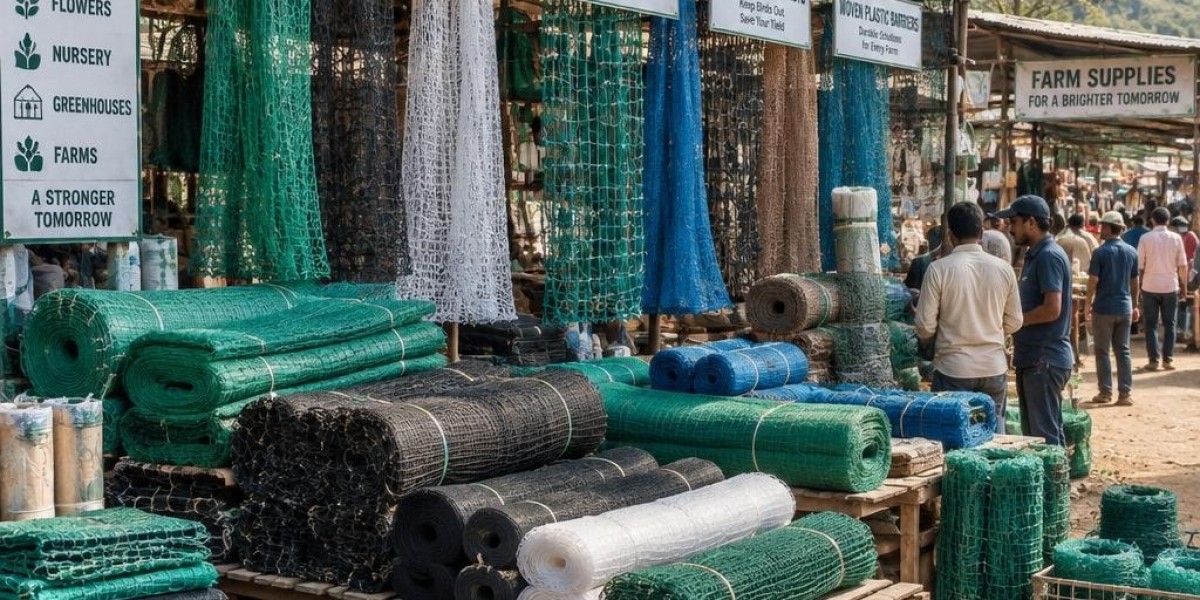
Shade nets help manage sunlight exposure and support suitable growing conditions. Anti-insect nets are designed to restrict pest entry into protected areas. Anti-hail nets provide a protective covering against hail exposure, while windbreak nets help reduce the direct effect of strong winds.
Bird nets are also used in agricultural settings where birds may damage crops or interfere with production activities. These specialized applications demonstrate the importance of product differentiation in the industry.
Importance of Greenhouse and Nursery Applications
Greenhouse cultivation has increased the relevance of agricultural netting as part of integrated growing infrastructure. Growers use netting systems to manage sunlight, airflow, and access to protected cultivation spaces.
Nurseries also depend on suitable protective coverings to support the development of seedlings and young plants. Shade management is particularly important in these environments because young plants can be sensitive to environmental conditions.
Agricultural nets provide flexibility for nursery operators who require protective materials suited to different plant varieties and cultivation stages.
Changing Farmer Preferences
Purchasing preferences are increasingly influenced by product functionality, durability, and ease of maintenance. Farmers want products that address their specific agricultural challenges without creating unnecessary operational difficulties.
The ability to select different mesh structures and materials is therefore an important consideration. Growers may evaluate the intended crop, local weather exposure, ventilation requirements, and installation location before selecting a product.
Product demonstrations and guidance from distributors can help farmers understand the differences between netting solutions and make suitable purchasing decisions.
Distribution and Industry Development
Distribution networks connect agricultural net manufacturers with growers, retailers, farm supply businesses, and greenhouse operators. Strong distribution arrangements can improve product accessibility and help customers identify appropriate netting solutions.
Online agricultural platforms are also creating additional opportunities for product discovery. Detailed descriptions, material specifications, installation guidance, and customer support can help buyers evaluate products before purchasing.
Future Outlook
Innovation will continue to influence the Agriculture Nets Market as manufacturers respond to changing farming requirements. Improved materials, specialized designs, and practical installation systems can help strengthen the relevance of agricultural netting across different applications.
The industry's long-term development will depend on its ability to balance product performance, environmental considerations, affordability, and changing customer expectations.
Frequently Asked Questions
Q1. What is UV stabilized agricultural netting?
UV stabilized agricultural netting is designed with material properties that help resist degradation caused by prolonged sunlight exposure. It is commonly considered for outdoor agricultural installations.
Q2. How does innovation influence agricultural net manufacturing?
Innovation supports improved material selection, mesh design, weaving consistency, durability, and application-specific product development.